 By
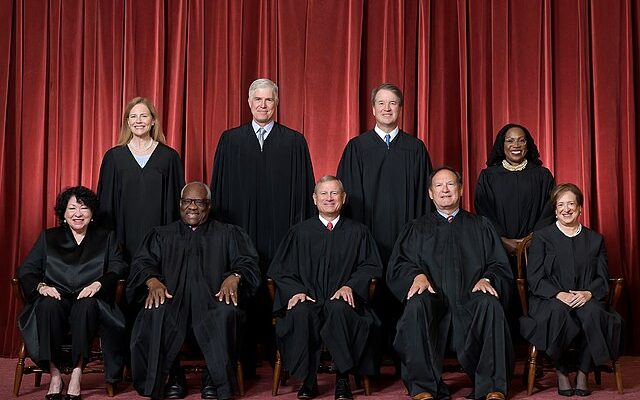
By The Supreme Court is more than doubling the size of its police force and investing millions of dollars in expanded security as threats against the justices continue to rise, mostly from leftwing radicals, marking one of the largest protective buildups in the institution’s history.
The expansion reflects growing concerns over the safety of the justices following years of politically charged demonstrations, assassination threats, and other security incidents. Once focused primarily on protecting the Supreme Court building itself, the Supreme Court Police are now rapidly expanding residential security details, travel protection, threat assessment, and cybersecurity operations, according to Politico.
Recruitment materials for the force emphasize its broader mission, showing officers escorting officials into armored vehicles alongside explosive-detection dogs and heavily armed personnel. The campaign carries the slogan, “The highest court. A higher calling.”
For decades, the Supreme Court Police consisted of fewer than 200 officers whose primary responsibility was securing the courthouse. That mission has changed dramatically as threats against members of the nation’s highest court have intensified.
One former court staff member said the increased protection has come with tradeoffs for the justices.
“The justices are averse to the intrusion into their personal lives that comes with increased security, but they are resigned to the need for it both personally and for the court as an institution,” the former staffer said.
The most significant catalyst for the expansion came in 2022 after a draft opinion overturning Roe v. Wade was leaked, triggering protests outside the homes of several conservative justices despite federal law prohibiting demonstrations intended to influence judges.
That June, California resident Sophie Roske traveled to the Maryland home of Justice Brett Kavanaugh armed with a Glock pistol, ammunition, pepper spray, zip ties, duct tape, lock-picking tools, and other equipment. Roske ultimately called authorities on herself before carrying out the attack and was arrested outside Kavanaugh’s residence.
The assassination plot prompted a major reassessment of Supreme Court security. Around the same time, several conservative justices also faced demonstrations outside their homes, while Justice Amy Coney Barrett’s residence was later targeted in a swatting incident that prompted a significant law enforcement response.
Speaking during a recruiting event, Supreme Court Police Sgt. Mark Hosier cited the Kavanaugh case as a turning point.
“They arrested someone, it was very national news, that had attempted to come up to Justice Kavanaugh’s home. This is right after the leak of the case came out. … It showed the need for a serious, growing residential security unit, which is still in the process. … And we are hiring for all these units right now, at the same time.”
The incident also accelerated the court’s move away from relying on the U.S. Marshals Service for supplemental residential protection. Responsibility for protecting the justices at their homes has now shifted fully to the Supreme Court Police.
The security expansion comes with a substantial increase in funding. Budget documents show the court has requested $210.3 million for salaries and expenses in fiscal year 2027, more than double its funding level from 2022. The proposal includes dozens of additional officers assigned to protection details and courthouse security, along with expanded staffing for threat assessment and cybersecurity. The court is also offering hiring bonuses and competitive salaries as it seeks to recruit experienced officers.
Congress has approved tens of millions of dollars in supplemental security funding, although some lawmakers have questioned how the money is being spent.
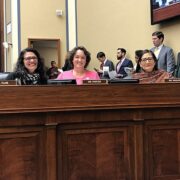
“We provide money for the Supreme Court. They’ve never come up and tell us what they’re doing with the money that we appropriate,” Rep. Rosa DeLauro said during an April hearing.
The heightened security has also reshaped the daily lives of the justices themselves.
Justice Clarence Thomas said increased threats have significantly altered his travel and public appearances.
“The security concerns now are much different from the way they were when I first became a circuit justice. That’s really one of the big changes since I’ve been on the court — that it’s become very, very dicey,” Thomas said, adding that he has canceled certain trips and events because of safety concerns.
Justice Amy Coney Barrett likewise described adapting to constant protection after joining the Court. She recalled one occasion when security personnel sent her home wearing a bulletproof vest that remained visible to her son. Barrett has also said she prefers to perform routine activities, such as grocery shopping, independently whenever possible despite the increased precautions.
Despite the expanded security presence, the justices continue to make public appearances for speeches, educational events, and book promotions. Those appearances, however, are now accompanied by significantly more visible protection as the Court responds to what officials describe as an increasingly dangerous threat environment.
The growing security apparatus reflects the extraordinary pressures facing the nation’s highest court as it continues to issue decisions that effectively demands that liberals pass laws through Congress rather than have the Court do it for them.
[Read More: Radical Teacher Marries Man In Gaza Over Zoom To Help Him Come Here]