 By
By California regulators are pressing utilities to direct hundreds of millions of dollars in contracts toward state-certified LGBT-owned businesses, expanding a supplier-diversity regime that began decades ago with race and sex and now reaches sexual orientation and gender identity.
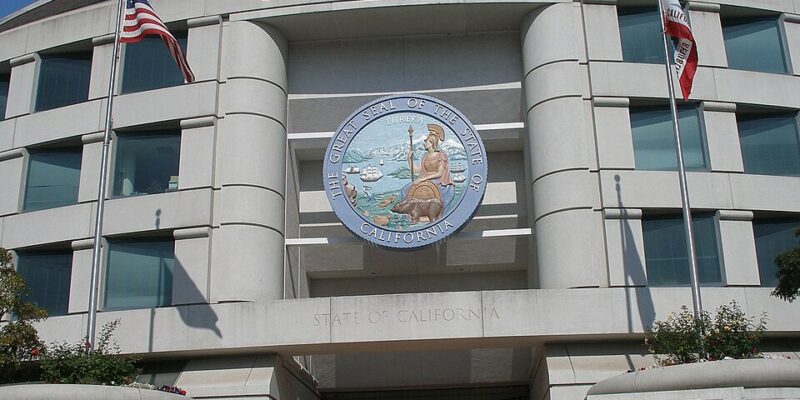
The program is overseen by the California Public Utilities Commission, which regulates privately owned utilities serving the state’s 39 million residents. Those utilities are not small players. In 2024, they spent more than $43 billion on contractors for fuel, engineering, surveying, and other services.
That makes the state’s supplier-diversity rules more than symbolic.
The initiative dates back to 1986, when Republican Gov. George Deukmejian signed Assembly Bill 3678, requiring certain utilities to submit annual plans for procuring goods and services from woman- and minority-owned businesses. The CPUC later built out its Supplier Diversity Program to enforce those expectations.
Under Democratic leadership, the program expanded.
In September 2014, then-Gov. Jerry Brown signed legislation directing the CPUC to recognize LGBT-owned businesses for supplier-diversity benefits. Gov. Gavin Newsom later pushed for broader participation across the energy sector.
Advocacy groups also leaned on regulators during implementation. According to the City Journal report, BuildOUT California argued that “homophobia” existed within “the ranks of the utility companies,” while the state’s legislative LGBTQ caucus warned in a 2021 letter that lower targets would be “an insult to the LGBTQ+ community.”
By 2022, the CPUC had set specific goals for large utilities — those with annual revenues above $25 million. The targets called for 0.5 percent of procurement from LGBT-certified businesses in 2022, 1 percent in 2023, and 1.5 percent in 2024 and thereafter.
If met in 2024, that target would have steered roughly $633 million in utility contracts to LGBT-certified firms.
SCOOP: California is pressuring public utilities to award $633 million in special contracts to “LGBT-owned” firms.
— Christopher F. Rufo ⚔️ (@realchrisrufo) June 16, 2026
But the program is now drawing ridicule online, where critics and political commentators have mocked what many have described as a state-backed “gay certification” process.
Much of the mockery has focused on the documentation business owners may use to prove eligibility. The certification process relies on self-attestation and supporting documents reviewed through the Supplier Clearinghouse. Acceptable evidence can include a letter from an “LGBT organization” attesting to sexual preferences, proof of media identification as LGBT, or three letters from personal contacts on company letterhead confirming homosexual orientation.
That has opened the program to a wave of “gay enough” jokes from commentators and users on X, who have mocked the idea of government-approved identity verification for utility contracts.
The ridicule has only intensified because false representation can carry penalties of up to one year in county jail. Critics have responded with sarcasm over the prospect of state regulators policing whether contractors are truthfully representing their sexual orientation.
What exactly must one do to become “fully gay certified?”
— Wilfred Reilly (@wil_da_beast630) June 17, 2026
The National LGBTQ+ & Allied Chamber of Commerce also offers certification pathways, accepting documents such as human resources complaints or police records of alleged discrimination. As the chamber says on its website, “Certification is a journey, not a destination.”
Is there a test?
— Marc Andreessen 🇺🇸 (@pmarca) June 16, 2026
One participant, Mary Ann Horton, an early internet pioneer credited with helping develop the e-mail attachment, registered a company as both woman- and LGBT-owned after transitioning.
Horton told City Journal the process required “a mess of documentation,” including a domestic-partner affidavit, a reissued birth certificate, and a “therapist carry-letter” verifying transgender identity.
Horton’s firm, Red Ace, later secured a part-time cybersecurity contract with San Diego Gas & Electric. According to Horton, a company official indicated that diversity-list status helped make the hire possible.
“If I was a straight, white male, I might be concerned I don’t have the same opportunity,” Horton said. “It worked out great for me.”
Utilities have used LGBT-certified firms for a wide range of services.
In 2022, SDG&E allocated $8.6 million, or 0.36 percent of procurement, to LGBT-certified businesses. One vendor produced a supplier-diversity training video featuring an animated character declaring, “Never fear when your Ambassador for Excellence is here. I can show you exactly how to source diverse vendors.”
Other certified entities reportedly include sign-language interpreters, kombucha producers, and coaching firms offering guidance on managing feelings about “the latest election cycle.”
The pushback is not limited to utility contracting. Similar institutional efforts to formalize LGBTQ+ identity categories have faced resistance elsewhere, including in academic settings, where researchers have noted mocking and irreverent responses from some undergraduate students to university-led LGBTQ+ surveys in STEM fields.
The California program has also reportedly drawn enough controversy that the Department of Justice opened an inquiry into the state’s supplier-diversity system.
The program sits uneasily beside California’s own constitutional limits. In 1996, voters approved Proposition 209, which bars preferential treatment based on race, sex, or ethnicity in public contracting. Voters rejected an attempt to repeal it in 2020.
Critics argue the CPUC has created something that looks very much like a quota system while calling it a set of “goals.”
Those goals include 15 percent for minority-owned firms, 5 percent for women-owned firms, 1.5 percent for disabled-veteran-owned firms, and 1.5 percent for LGBT-owned firms. Utilities must also file extensive reports, collect demographic data, and explain shortfalls.
Despite the pressure, participation remains limited.
Procurement from LGBT-owned businesses fell 5 percent in 2024, and the Supplier Clearinghouse lists only 451 LGBT-certified firms, compared with 3,750 minority business enterprises.
The CPUC did not respond to requests for comment by the original report’s deadline.
The larger issue is what California now thinks utility regulation is for. A program that began as a contracting initiative has become another tool for ideological management, pushing energy companies to weigh identity categories alongside cost, reliability, and competence.
As the City Journal article by Christopher F. Rufo and Austen Hufford concludes, “Californians don’t need an energy system delivered by gay contractors; they need an energy system that works. Utility regulators should be in the business of regulating utilities, not verifying contractors’ sexual preferences. Companies should award contracts based on competence, quality, and cost—not the sexuality of the business owners.”
[Read More: Disgraced Dem Gets Worse News]