 By
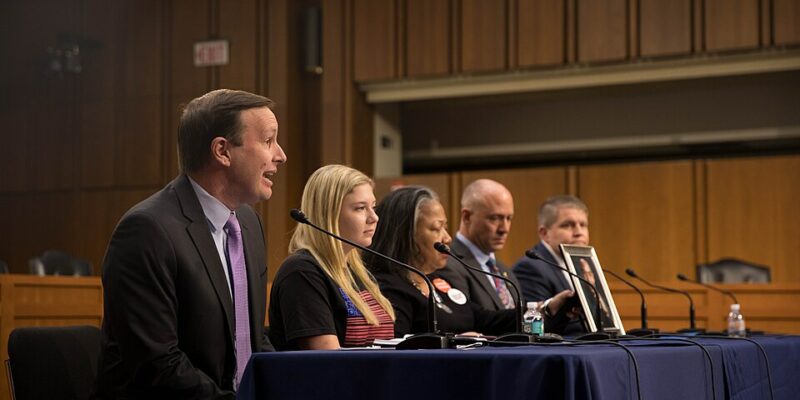
By Sen. Chris Murphy, a Democrat from Connecticut, is once drawing scrutiny for his radicalism, this time for announcing that he, in effect, has an enemies list and plans to use the government against them if Democrats gain power.
Murphy directed his comments at David Ellison, head of Paramount Global, writing on Twitter that executives in the sector should prepare for sweeping intervention. “Ellison and the information oligarchs should enjoy it while they can,” he said, “because when Democrats win power we are going to break these anti-consumer, anti-free speech media conglomerates into pieces.”
Ellison and the information oligarchs should enjoy it while they can because when Democrats win power we are going to break these anti-consumer, anti-free speech media conglomerates into pieces. pic.twitter.com/SfzspyZrF3
— Chris Murphy 🟧 (@ChrisMurphyCT) April 24, 2026
The remarks reflect a broader pattern of Democratic rhetoric framing certain media and technology firms as threats, particularly those perceived as outside the party’s political alignment, explained Glenn Reynolds, a law professor at the University of Tennessee. Critics argue that similar concerns about concentration were less prominent when major platforms were viewed as supportive during the 2020 election cycle, including episodes involving content moderation and the suppression of high-profile stories.
Murphy’s comments align with warnings from other Democratic figures, including Sen. Elizabeth Warren and Senator Ruben Gallego, a Democrat from Arizona, who have also signaled potential regulatory action across business sectors. Analysts say the combined message suggests that a return to Democratic control could bring expanded antitrust enforcement, tax increases, and regulatory scrutiny for large corporations.
The rhetoric comes amid rising tensions between Democratic policymakers and parts of the private sector. In California, lawmakers have advanced tax proposals targeting high-income executives and major technology firms, prompting some high-profile relocations. In New York, City Council member Zohran Mamdani has taken a more expansive view, declaring “capitalism is theft” and calling for “the end of the free market” and “seizing the means of production.” He has also proposed higher taxes on luxury properties owned by billionaires, including hedge fund manager Ken Griffin, while describing corporations as “predatory.”
These positions have emerged alongside broader national reactions to corporate leadership and political violence, including commentary in some quarters that has portrayed figures such as Luigi Mangione sympathetically following attacks on executives.
[Read More: Democrat Threatens Foreign Leaders Because They Worked With Trump]
Business observers note that while antitrust enforcement can address legitimate concerns about market concentration—particularly in media and technology sectors with significant influence over information flows—the current rhetoric is viewed by some as focused less on competition policy than on control. Democratic opposition to changes in platform ownership, including Elon Musk’s acquisition of Twitter, has underscored the central role these platforms play in shaping political discourse.
Musk has been particularly targeted because of his support for free speech and Donald Trump. It was widely expected that if Kamala Harris had prevailed in 2024 she would have launched “multiple investigations” into the billionaire.
For corporate leaders, the implications are becoming harder to dismiss, but it shouldn’t. Democrats have been building enemies lists for years, and during the Biden administration, they routinely used to the government to censor or attack those who disagreed with them.
Under the advice of the Southern Poverty Law Center, which has now been caught funneling millions of dollars to racist groups they claim to fight against and is facing federal fraud charges, the FBI during Biden’s term labeled pro-lifers as more dangerous than Islamic terrorists. In 2023, the court was forced to crack down on Joe Biden’s creation of a censorship board that pressured social media companies to silence conservative voices.
There’s a reason they are at one of their most unpopular points ever as a party, despite the president having low approval ratings. It appears that the business community that has historically provided financial and institutional support is beginning to wake up.
[Read More: Fauci Right-Hand Man Indicted For Hiding COVID Secrets]