 By
By The Trump administration has expanded its military campaign against Iran as a coalition of allied nations joined U.S. and Israeli forces in carrying out strikes against Iranian targets, signaling broad international backing for Operation Epic Fury and efforts to weaken Tehran’s influence across the Middle East.
The coordinated military action reflects a wider effort to dismantle Iran’s regional power structure, with participating countries demonstrating support for the operation’s objectives as hostilities continue.
At the same time, the administration has drawn attention for strengthening ties with Turkey. President Donald Trump has recently spoken favorably of the NATO ally, while the administration is reportedly weighing the transfer of F-35 fighter jets—among the most advanced aircraft in the U.S. arsenal—to the Turkish government.
The potential sale has prompted criticism from some observers, who argue that Turkey has become increasingly authoritarian and maintains relationships with groups and governments that have often been at odds with Western interests. Those critics have questioned whether Ankara’s long-term strategic objectives are fully aligned with those of the United States.
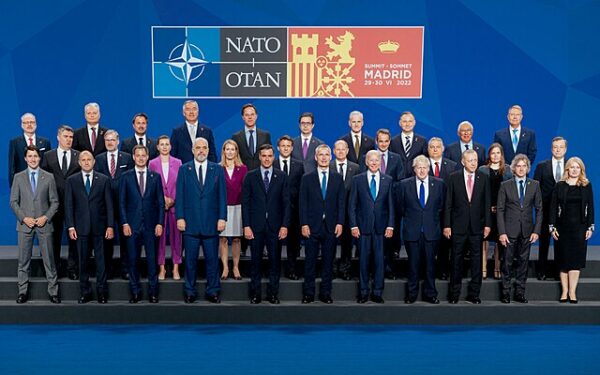
The diplomatic outreach comes as Turkey hosts a two-day NATO summit expected to focus on increasing European defense spending and encouraging allied nations to assume a larger share of the alliance’s security responsibilities.
ABC News writes that the summit also comes after Trump has repeatedly floated the idea of leaving NATO. As recently as April, Trump expressed frustration with European allies amid the U.S.’s war with Iran, as many members have been reluctant to join military operations in re-opening and patrolling the Strait of Hormuz.
“Oh yes, I would say [it’s] beyond reconsideration. I was never swayed by NATO,” Trump said in April when asked if he would reconsider the U.S.’s membership after the conflict ends. “I always knew they were a paper tiger, and Putin knows that too, by the way.”
More broadly, Trump has been extremely critical of NATO allies over their ability to share the burden of contributing to the post-World War II alliance.
Whitaker said, “The United States remains a proud NATO member,” but “we have responsibilities elsewhere in the world as the world’s only superpower.”
The Trump administration has framed that effort as part of its vision for “NATO 3.0,” an updated approach intended to restore the alliance’s strength and resolve reminiscent of the years immediately following World War II, according to The Associated Press.
Alliance leaders are expected to discuss how NATO can respond to evolving global security challenges while reinforcing its collective defense commitments
[Read More: How Biden’s Open Border Shredded America]