 By
By A new Trump administration rule restricting commercial driver’s licenses for certain immigrants took effect Monday, potentially reshaping a small but important corner of the U.S. trucking workforce just as the industry faces rising fuel costs tied to the conflict with Iran.
The Transportation Department regulation, announced Feb. 11, bars asylum seekers, refugees, and recipients of Deferred Action for Childhood Arrivals (DACA) from obtaining or renewing commercial driver’s licenses—even if they are legally authorized to work in the United States. Current license holders may continue driving for now, but they will be unable to renew their credentials when they expire.
About 200,000 immigrants hold roughly 5 percent of all commercial driver’s licenses nationwide, according to Federal Motor Carrier Safety Administration data. In a country where trucks carry more than 70 percent of freight—from food and heavy machinery to hazardous materials—even a modest shift in the driver pool can ripple through supply chains.
Administration officials have cast the measure as a public safety reform, writes The Washington Post. Transportation Secretary Sean P. Duffy argued the rule addresses long-standing vulnerabilities in the licensing system. In a statement last month, he said the change corrects a situation in which “for far too long, America has allowed dangerous foreign drivers to abuse our truck licensing systems — wreaking havoc on our roadways.”
Duffy and other officials have maintained that foreign driving histories can be difficult to verify and that some immigrant drivers have depressed wages and working conditions in the industry.
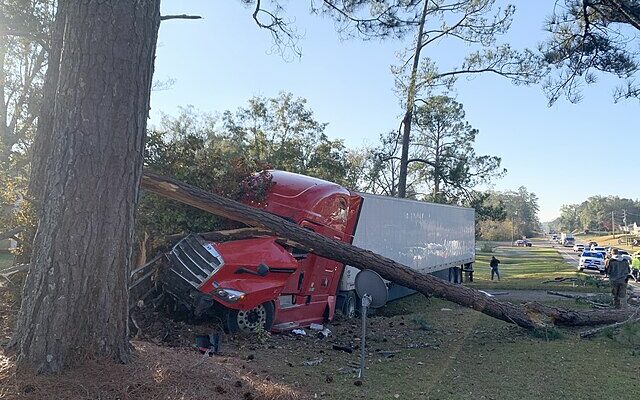
The rule arrives after several incidents of immigrant truck drivers causing deadly accidents on the nation’s highways. A deadly Florida highway crash involving Harjinder Singh, an illegal migrant from India, triggered a national debate over immigration policy and trucking safety after investigators found he had failed basic English and traffic sign tests before receiving a commercial driver’s license in California. Singh, who allegedly made an illegal U-turn using a restricted access point that blocked traffic and killed three people, scored only two correct answers on a 12-question English proficiency test and identified just one of four highway signs, raising questions about how he obtained a license. Transportation Secretary Sean P. Duffy and other federal officials blamed California’s licensing practices and broader sanctuary policies, arguing that regulatory failures allowed an unqualified driver to operate a commercial vehicle. The crash became a political flashpoint, with the Trump administration pledging stricter enforcement of commercial driver standards and emphasizing English proficiency requirements as part of a broader push to improve highway safety.
China has allegedly been helping undocumented immigrants obtain trucking licenses in the United States.
Lawsuits challenging the rule argue that federal officials have not demonstrated that immigrant drivers pose greater safety risks than other license holders. “The Trump administration has conceded that there’s no empirical relationship between a person’s nation of domicile and safety outcomes,” said Wendy Liu, an attorney with the Public Citizen Litigation Group, which is challenging the regulation in court.
One of the plaintiffs is Aleksei Semenovskii, a 41-year-old asylum seeker from Russia who has worked as a long-haul truck driver since 2020 and faces license expiration in September.
The licensing rule is part of a broader tightening of federal oversight of the trucking workforce. In recent months the Transportation Department has strengthened English-language requirements during roadside inspections, leading to thousands of drivers losing privileges. Regulators also revoked accreditation from nearly 3,000 driver-training centers in December for failing to meet federal standards and warned several states—including California, New York, and Pennsylvania—that federal funding could be withheld if licensing rules are not enforced properly.
President Trump has urged Congress to go further. During his State of the Union address he called for legislation imposing stricter limits on immigrant participation in the trucking industry. Sen. Jim Banks (R-Ind.) soon introduced a bill that would revoke existing commercial licenses held by the same categories of immigrants targeted by the new rule. The measure is advancing in Congress but has not yet received a vote.
Some industry groups support the administration’s approach. Lewie Pugh, vice president of the Owner-Operator Independent Drivers Association, which represents more than 130,000 small trucking companies and independent operators, said many drivers see the rule as a safety measure.
“Our members support anything that will make the road safer not only for them but for all the families and motorists that they share the highway with,” Pugh said.
Still, transportation lawyers and analysts do not expect the change to trigger a dramatic labor shortage. Instead, they say the more likely consequence is a gradual tightening of driver supply, which could push freight rates upward.
“I have not heard any concerns about labor shortages or significant disruption to the supply chain or transportation industry, but this change will be reflected in the cost of doing business,” said Gregory Reed, a transportation attorney focused on regulatory matters.
[Read More: