 By
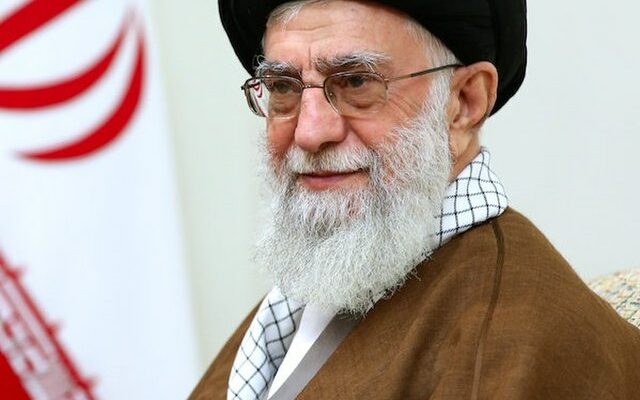
By Before the United States and Israel initiated their assault on Iran’s capital, the Central Intelligence Agency had spent months tracking Ali Khamenei, Iran’s supreme leader, mapping his movements and patterns of life. When analysts confirmed that he would be among a gathering of senior officials on a Saturday morning in Tehran, planners recalibrated the timing of the strike to put him within reach—a decision that transformed a regional confrontation into a historic decapitation of Tehran’s leadership.
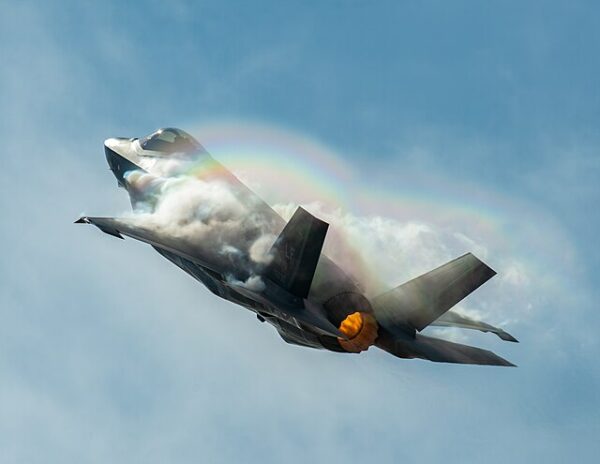
In the pre-dawn hours, Israeli fighter jets carrying long-range precision munitions took to the skies. At approximately 9:40 a.m. local time on February 28, explained The New York Times, a coordinated barrage struck a leadership compound in central Tehran, killing Khamenei along with scores of senior military commanders and intelligence officials. Iranian state media later confirmed his death, acknowledging the loss of the supreme leader and reporting dozens of other casualties among the country’s ruling elite.
Among those killed were key figures in the Islamic Republic’s security apparatus, including the head of the Revolutionary Guard and senior commanders who had long marshalled Iran’s regional networks. The strike, nearly simultaneous across multiple locations, was designed to overwhelm any chance of escape and to dismantle the regime’s command and control in an instant.
Israeli officials described the operation as achieving tactical surprise, noting that the daylight timing—chosen to match the intelligence window—confounded expectations that such an assault would come under cover of darkness. The decision to act in full daylight was itself a function of the rare intelligence opportunity provided by months of tracking and the fortuitous assembly of Iran’s leadership at a single site.
The officials said that after the decision to strike, the Ayatollah and his senior commanders were “gone in 60 seconds.”
The United States, for its part, played a defining role in shaping that window of opportunity. According to officials familiar with the operation, American intelligence had steadily built confidence in its understanding of Khamenei’s whereabouts and routines. That long game paid off in the hours before the strike, when analysts identified the meeting in Tehran that would bring the supreme leader above ground in a predictable location. That information was shared with Israeli counterparts, prompting the allied recalibration of timing and targets.
In Washington, officials have been cautious about publicly detailing the intelligence contribution, even as the White House acknowledged broad cooperation with Israel in the operation. Sources familiar with planning spoke on condition of anonymity, citing the sensitivity of intercepting and sharing intelligence at the highest levels of two allied governments.
The elimination of Khamenei, who had ruled Iran for nearly four decades and shaped its foreign policy and strategic posture, marks a profound rupture in the Islamic Republic’s political order. Tehran now confronts the urgent challenge of succession amid ongoing military pressure and a widening conflict that has already drawn in regional actors and major world powers.
Iran has vowed retaliation, and missile and drone strikes have since targeted U.S. forces and allied positions across the Middle East. Analysts warn that the joint U.S.–Israeli operation, intended to decapitate Tehran’s leadership, may have triggered a broader and more protracted confrontation—one in which the death of Iran’s supreme leader is only the opening act.
For years, Khamenei was the ideological and strategic architect of the regime’s support for terrorism against the United States and its allies, underwriting proxy networks and deepening Iran’s footprint across Iraq, Syria, Lebanon and Yemen. Throughout 2023 and 2024, he allegedly helped fund pro-Gaza protests across the United States on college campuses and had several moles and allies connected to Democrats such as Joe Biden and Kamala Harris.
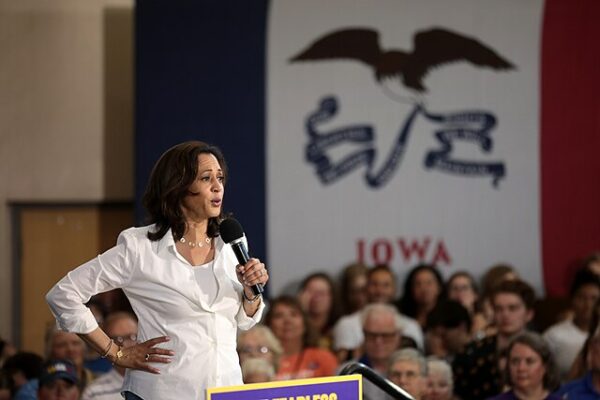
The former vice president and frontrunner for the Democratic nomination in 2028 has said she opposes the war to overthrow the Islamic Republic.
Donald Trump is dragging the United States into a war the American people do not want. Let me be clear: I am opposed to a regime-change war in Iran, and our troops are being put in harm’s way for the sake of Trump’s war of choice.
Read my full statement: pic.twitter.com/JmxZaC8vBr
— Kamala Harris (@KamalaHarris) February 28, 2026
With him out of the picture, freedom is in the grasp of Iranians for the first time in decades.
[Read More: Democrat Rep. Claims America Isn’t Her Country]