 By
By Canada’s public broadcaster has sent a shocking memo to its journalists that, as the 25th anniversary of September 11 approaches, directs them not to describe the deadliest terrorist attack in American history as a “terrorist attack.”
It would be easier to dismiss the directive as another example of bureaucratic language policing if it were happening in a vacuum.
It is not.
Bit irritated by suggestions by some that this isn't authentic.
It's authentic. And, for anyone who has been paying attention (or read my book), they'd actually know this is quite consistent with past CBC approaches. pic.twitter.com/IcnLrTVHkJ
— Warren Kinsella (@kinsellawarren) August 26, 2026
The memo comes as Canada’s once unusually close relationship with the United States has deteriorated into an open trade war, anti-American sentiment has spread well beyond criticism of President Donald Trump, antisemitism has reached historic levels, and the country continues to push the boundaries of one of the world’s most permissive assisted-death regimes.
Against that backdrop, the CBC memo looks less like an isolated dispute over newsroom terminology and more like another indication of how dramatically Canadian institutions have changed.
The CBC circulated the internal reminder to reporters and editors across its news platforms ahead of the September 11 anniversary, according to a memo obtained by the National Post and first reported by the Toronto Sun.
The instruction is remarkably direct.
“Do not refer to the Sept. 11 attacks as terrorist attacks.”
Instead, the memo tells journalists: “The hijackings led to passenger jet crashes in Washington, D.C., Pennsylvania and Manhattan. The World Trade Center (WTC in second reference) was destroyed.”
The letter is signed “BB.” The Toronto Sun identified its author as Basem Boshra, senior director of journalistic standards and public trust at CBC News.
.@CBC keeps giving Canadians new reasons to question whether the institution can reform itself.@kinsellawarren’s reporting should be a breaking point.
Nineteen al-Qaeda terrorists hijacked four planes and deliberately murdered thousands of people in pursuit of an ideological… pic.twitter.com/qJNM5TGX2X
— Mike Fegelman (@MikeFegelman) August 27, 2026
What actually happened on September 11, 2001, is not at all ambiguous.
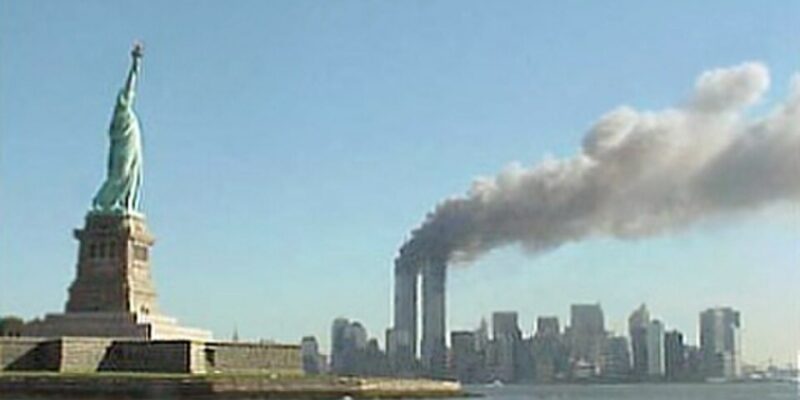
Nineteen members of al-Qaeda hijacked four commercial airliners as part of a coordinated attack on the United States. Two planes were deliberately flown into the World Trade Center towers in Manhattan. A third struck the Pentagon. The fourth crashed in Pennsylvania after passengers fought the hijackers.
Nearly 3,000 people were killed, including 24 Canadians.
The attacks launched the United States into a war in Afghanistan, reshaped American national security policy and led to the creation of the Department of Homeland Security. Osama bin Laden, the al-Qaeda leader who orchestrated the plot, was killed by U.S. forces in Pakistan in 2011.
CBC insists its policy does not amount to denying that September 11 was terrorism.
Spokesperson Kerry Kelly said it is “wholly inaccurate to state our journalists have been urged to declare that this was not a terrorist act.”
Rather, CBC says it generally requires the words “terrorist” and “terrorism” to be attributed to another source instead of adopted by its journalists as descriptions of events.
“CBC preferences use of these words with attribution to credible sources, a practice shared by many of the world’s top journalistic organizations,” Kelly wrote.
CBC News editor-in-chief and general manager Brodie Fenlon previously explained that the network does not independently designate organizations as terrorist groups or particular acts as terrorism “because these words are so loaded with meaning, politics and emotion that they can end up being impediments to our journalism.”
Its internal language guide instructs journalists to “exercise extreme caution before using the words terrorist or terrorism,” describing the terms as potentially “highly contested.”
“Terrorism generally implies attacks against unarmed civilians for political, religious or some other ideological reason. But it’s a highly controversial term that can leave journalists taking sides in a conflict.”
The policy is longstanding. CBC has similarly preferred “attacks” when referring to the 2005 London bombings and the 2004 Madrid train bombings unless terrorism is attributed to a source. Reuters and the BBC employ similar attribution rules.
CBC’s policy became a source of controversy again following Hamas’ October 7, 2023 attack on Israel, when a leaked memo instructed journalists not to independently call Hamas fighters terrorists. Hamas is officially designated as a terrorist organization by the Canadian government.
The latest controversy is unfolding at an especially strange moment in Canada’s relationship with the country targeted on September 11.
For generations, Canadians and Americans enjoyed one of the closest relationships between two neighboring countries anywhere in the world. The countries share a continent, a defense partnership, extensive cultural ties and one of the largest trading relationships on earth.
That relationship is now under severe strain.
The Trump administration’s tariffs, the president’s repeated jokes about Canada becoming America’s 51st state and an escalating trade dispute have generated enormous anger north of the border. But polling suggests the resentment is no longer confined to Trump or the American government.
An Angus Reid Institute survey released in August found that 48 percent of Canadians now view the American people unfavorably, while just 45 percent view Americans favorably.
The feeling is decidedly not mutual.
Seventy-nine percent of Americans surveyed said they have a favorable view of Canadians.
Canadians were considerably more hostile toward Trump himself, with 79 percent viewing the president unfavorably. But the fact that nearly half of Canadians now say they hold an unfavorable view of Americans themselves marks a notable departure from the relationship the two countries maintained for decades.
The political relationship has deteriorated as Canada’s economy has crashed due to massive migration to the country.
SERIOUS QUESTION: HOW DOES THIS EVEN HAPPEN? 🇨🇦
Canada is a resource-rich G7 country with oil, gas, uranium, potash, timber, critical minerals and one of the best-educated populations on Earth.
Yet Canada’s GDP per capita has now fallen below Alabama.
A country this rich… pic.twitter.com/oQXeQgHuQC
— Marc Nixon (@MarcNixon24) August 25, 2026
Trade negotiations collapsed again in August, and the Trump administration imposed 50 percent tariffs on roughly $20 billion in Canadian imports. Prime Minister Mark Carney responded with plans for dollar-for-dollar retaliation against American goods.
The dispute has already spread beyond Washington and Ottawa. Saskatchewan announced a 50 percent tariff on American alcohol, while several Canadian provinces have removed U.S. alcohol from government-controlled store shelves.
The growing cultural divide extends beyond the United States. Canada is also experiencing an extraordinary surge in antisemitism.
Statistics Canada recorded 920 police-reported hate crimes targeting Jews in 2024. Jews were the targets of 70 percent of all religion-motivated hate crimes in the country that year despite representing only a small fraction of Canada’s population.
Those numbers followed an enormous increase in antisemitic incidents after 2020.
B’nai Brith Canada, which uses a broader methodology than police statistics, recorded 6,800 antisemitic incidents in 2025 — the most since the organization began keeping its annual audit in 1982 and an increase of more than 145 percent from 2022.
The problem has become increasingly physical.
By July 15, B’nai Brith had already recorded 27 violent antisemitic incidents in Canada during 2026. That was more than double the 10 violent incidents recorded during all of 2025.
Recent incidents have included attacks on Jewish institutions and assaults on Jewish Canadians. In Montreal in July, multiple Hasidic Jewish men walking home from Shabbat services were assaulted, robbed or harassed in what B’nai Brith described as a series of apparently coordinated attacks.
New Conservative Post has previously documented the increasingly hostile environment facing Canadian Jews, including anti-Israel demonstrations that descended into vandalism and violence and repeated controversies surrounding the country’s response to radicalism following October 7.
Then there is assisted death.
Canada legalized Medical Assistance in Dying, commonly known as MAID, in 2016. What began as a program for adults facing grievous and irremediable medical conditions has rapidly become a significant part of the country’s health-care system.
In 2024, 5.1 percent of all people who died in Canada received MAID, according to Health Canada.
And the debate over who should qualify has continued moving outward.
Children are not currently eligible for MAID under Canadian federal law. A recipient must be at least 18 years old.
But a parliamentary Special Joint Committee on Medical Assistance in Dying formally recommended in 2023 that Parliament change the Criminal Code to allow minors deemed capable of making the decision to qualify for assisted death.
The committee recommended initially restricting the practice to so-called mature minors whose natural deaths are reasonably foreseeable.
Perhaps most strikingly, the committee recommended that parents or guardians be consulted “where appropriate,” but that the decision of a minor deemed capable of making the choice should ultimately prevail.
The recommendation has not become law.
But it is no longer accurate to describe assisted death for children in Canada as an idea confined to the political fringe. A joint committee of the Canadian Parliament formally recommended creating a legal framework for it.
The discussion has gone further still.
During parliamentary testimony, Dr. Louis Roy, representing the Collège des médecins du Québec, described recommendations from the physicians’ organization involving emancipated minors between 14 and 17.
He also told lawmakers that its committee had considered babies from birth to one year old born with severe deformities or syndromes that offered virtually no chance of survival and could cause extreme suffering.
“This avenue could be explored.”
Infants obviously cannot request or consent to MAID themselves, and no such policy is currently Canadian law. That distinction matters.
So does the fact that the subject reached formal testimony before the Canadian Parliament at all.
None of these issues by itself proves some sweeping theory about an entire country of nearly 40 million people. Canada remains a democratic American ally, millions of Canadians reject antisemitism, and intense opposition to both the expansion of MAID and the deterioration of relations with the United States exists inside the country itself.
But the pattern emerging from some of its most powerful institutions is increasingly difficult to ignore.
A country once defined in large part by its cultural proximity to the United States now has nearly half its population expressing an unfavorable view of Americans. Jewish Canadians are confronting levels of antisemitism unseen in decades. Parliament has seriously entertained assisted death for minors. A major physicians’ organization has raised the subject of ending the lives of severely ill infants.
And now the government-funded national broadcaster is preparing for the 25th anniversary of September 11 by reminding journalists not to call September 11 a terrorist attack.
Conservative MP Rachael Thomas called the CBC instruction shameful, accusing the broadcaster of redefining “terrorism in a way that downplays the atrocity.”
“Refusing to call it an act of terrorism dishonours the victims, their families, the survivors, and the first responders who witnessed the horrors of that day,” she wrote on Twitter. “Trying to sanitize or rewrite that history is deeply offensive and does a disservice to everyone who was affected by the attacks.”
This is absolutely shameful.
⁰The CBC is choosing to redefine terrorism in a way that downplays the atrocity of 9/11.
⁰Refusing to call it an act of terrorism dishonours the victims, their families, the survivors, and the first responders who witnessed the horrors of that day.… pic.twitter.com/svqqyk65fq— Rachael Thomas (@RachaelThomasAB) August 26, 2026
CBC says the policy is intended to preserve journalistic neutrality, but it’s another example of their “preparation for war” against the United States.
But neutrality does not require pretending that words have no meaning.
Twenty-five years after al-Qaeda terrorists hijacked four airplanes, deliberately flew them into American targets and murdered nearly 3,000 people, calling September 11 a terrorist attack is not taking sides.
It is describing what happened.
[READ MORE: The Conservative Underground Group In Hollywood]