 By
By President Donald Trump on Tuesday signed an executive order aimed at tightening controls on mail-in voting, directing federal agencies to verify voter eligibility and impose new handling requirements for ballots ahead of the 2026 midterm elections.
The order calls on the Department of Homeland Security, working with the Social Security Administration, to compile lists of verified U.S. citizens eligible to vote in each state. Those lists would be shared with state governments. It also directs the attorney general to prioritize prosecutions of election officials or others who distribute federal ballots to ineligible voters and to consider withholding federal funds from states that do not comply.
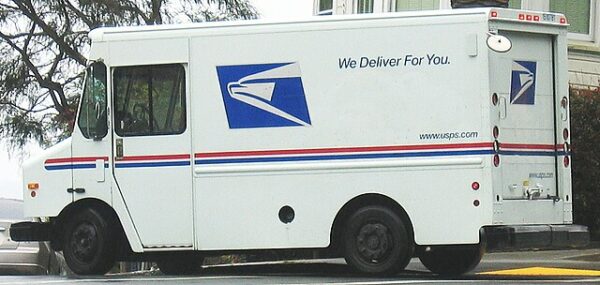
According to a White House fact sheet, the United States Postal Service would be instructed to transmit ballots only to individuals on state-specific mail-in and absentee participation lists. Ballots would also be required to be placed in secure envelopes marked as “Official Election Mail” and equipped with unique tracking barcodes.
“We want to have honest voting in our country, because if you don’t have honest voting, you can’t have, really a nation if you want to know the truth,” Trump said after signing the document in the Oval Office.
The order reflects Trump’s continued emphasis on stricter election safeguards following his 2020 loss to Joe Biden. He has long argued that expanded mail-in voting creates opportunities for fraud, though courts and election officials have repeatedly found no evidence of widespread irregularities sufficient to alter major election outcomes.
Voter fraud has appeared to be growing over the past decade, especially in Democratic-led states.
WOAH 🚨 James O'Keefe in Los Angeles finds the NGOs are having the homeless fill out voter registration forms “USING THE NAMES AND ADDRESSES OF REAL REGISTERED VOTERS AND FORGING THEIR SIGNATURES”
This would make it impossible to catch election fraudpic.twitter.com/RqbuYS2SkG
— Wall Street Apes (@WallStreetApes) March 24, 2026
A recent poll about mail voters recently revealed that over 15% of those asked claimed to illegally vote with them.
Huge voter fraud:
17% of mail-in voters admitted to voting in a state where they don’t live
21% admitted to filling out someone else’s ballot
8% revealed they were bribed to vote
Voter fraud is happening on a huge scale.
Nuke the filibuster and pass the SAVE America Act! pic.twitter.com/yMo6hGTjgk— Taya (@travelingflying) February 11, 2026
Concerns about mail-in voting security, however, predate Trump. Because absentee ballots are cast outside supervised polling places, election experts have historically viewed them as more vulnerable to risks such as forgery, coercion, theft, or mishandling compared to in-person voting.
A 2005 bipartisan Commission on Federal Election Reform, co-chaired by former President Jimmy Carter and former Secretary of State James Baker, highlighted those concerns, stating that “absentee ballots remain the largest source of potential voter fraud.” The commission recommended stronger safeguards, including limits on third-party ballot handling, while still supporting expanded access with appropriate protections. Carter later endorsed expanded mail voting during the pandemic with improved security measures, noting he had personally used absentee ballots for years.
Voting rights groups quickly criticized the order, arguing it could create new barriers for eligible voters, particularly those who rely on mail ballots due to age, disability, military service, or geographic constraints. They signaled that legal challenges are likely, citing the Constitution’s delegation of primary authority over election administration to the states.
Andrea Joy Campbell, a Democrat, said her office would review the order and pursue “appropriate legal action to ensure that every eligible voter in Massachusetts can vote and have their vote counted.”
“The Trump Administration cannot interfere with the right to vote and may not override state election authority,” Campbell said.
The NAACP also vowed to oppose the measure. “Not only is his order unconstitutional, it’s unserious,” said NAACP President Derrick Johnson. “His attempts to silence us will only make us louder — with our voices and our votes.”
The action follows continued Republican efforts in Congress to advance election-related legislation, including proposals requiring proof of citizenship and stricter voter identification standards. Trump has urged lawmakers to adopt such measures, arguing that failure to address vulnerabilities in mail-in voting could affect election outcomes.
Legal experts expect the order to face immediate challenges in court on the grounds that it may exceed presidential authority and conflict with state election laws. Those challenges could delay or limit its implementation before the 2026 midterm elections.
The order does not eliminate mail-in voting but seeks to expand federal involvement through verification, oversight, and ballot-handling requirements. Supporters describe it as a step toward restoring confidence in elections, while critics argue it risks federal overreach into a system historically administered by the states.
[Read More: NATO To Get Another Look]