 By
By As a partial shutdown of the Department of Homeland Security (DHS) stretches into its sixth week, President Donald Trump has ordered the agency to redirect existing funds to pay Transportation Security Administration (TSA) employees, setting up a legal and political clash with congressional Democrats.
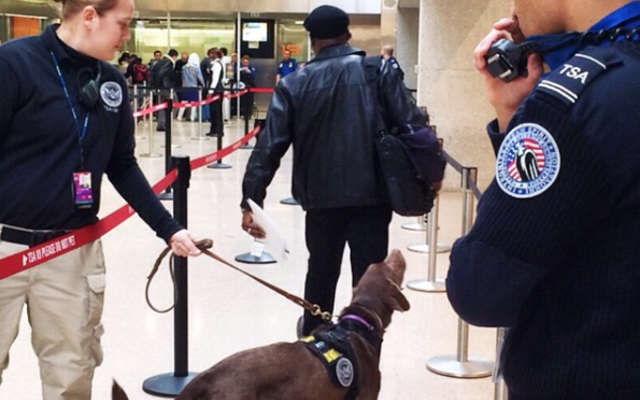
Trump signed a memorandum Friday directing DHS Secretary Markwayne Mullin and the Office of Management and Budget to identify funding streams with a “reasonable and logical nexus” to TSA operations and use them to cover pay and benefits for roughly 60,000 workers. That includes about 50,000 transportation security officers stationed at airports nationwide. Administration officials indicated that paychecks could begin reaching employees as early as Monday.
In the memo, Trump framed the situation as an urgent national security concern, calling it an “unprecedented emergency” as TSA personnel continue working without pay following the funding lapse that began in mid-February. He placed responsibility for the standoff on Democrats, accusing them of prioritizing limits on immigration enforcement over maintaining funding for essential security operations.
The shutdown stems from a broader partisan dispute over DHS funding, particularly surrounding immigration enforcement agencies, which are funded until 2029. Democrats have demanded “reforms” to Immigration and Customs Enforcement (ICE) and Customs and Border Protection (CBP) that essentially neuter enforcement and return to the open borders of Joe Biden. Since ICE is funded for years, Democrats have been holding the funding for TSA agents hostage.
The divide was underscored Friday when the Senate approved a bipartisan measure by voice vote to fund most of DHS—including TSA, the Coast Guard, and FEMA—through the remainder of the fiscal year, while excluding ICE and significant portions of CBP. House Republicans quickly rejected the proposal. Speaker Mike Johnson called the Senate plan unacceptable, and the House instead passed a separate stopgap bill to fund the entire department, including immigration agencies, for eight weeks.
That House measure faces steep opposition in the Senate, where Democrats have promised to filibuster. With both chambers now in recess, negotiations have stalled, leaving the partial shutdown unresolved.
Democrats have sharply criticized the administration’s move to redirect funds, signaling plans to pursue emergency litigation. A Democratic strategist appearing on CBS’s Face the Nation pointed to the Senate’s bipartisan vote as evidence that a compromise was available and accused House Republicans of prolonging the disruption. The strategist argued that the funding maneuver violates appropriations law and risks expanding executive authority beyond constitutional limits.
GOVERNMENT SHUTDOWN: Democrats are preparing emergency litigation against Trump asking Democrat judges to prevent him from ‘illegally’ paying TSA agents. pic.twitter.com/ZhPuJQopFj
— @amuse (@amuse) March 30, 2026
Legal experts expect any lawsuit to focus on whether the administration’s directive breaches the Antideficiency Act or undermines Congress’s power of the purse. Critics contend that shifting funds without explicit congressional approval sets a dangerous precedent.
Supporters of the president’s action argue that the directive falls within emergency authority and is necessary to maintain airport security operations. They point to increasing strain within TSA, including reported resignations and operational disruptions, as evidence that immediate intervention is required as America continues to be at war with the leading state sponsor of terrorism in the world.
The White House has maintained that any payments will come from previously appropriated funds tied to TSA functions and will comply with existing law, though the memorandum did not specify the exact funding sources. Administration officials have referenced broader domestic policy legislation passed last year as a potential basis.
Outside Washington, the effects of the shutdown are beginning to ripple through the nation’s transportation system. Travelers have been advised to check with airlines for delays as staffing pressures mount at airport security checkpoints. Other federal agencies remain funded through the end of the fiscal year and are not affected.
[Read More: Three Economic Warning Signs Flashing Red]