 By
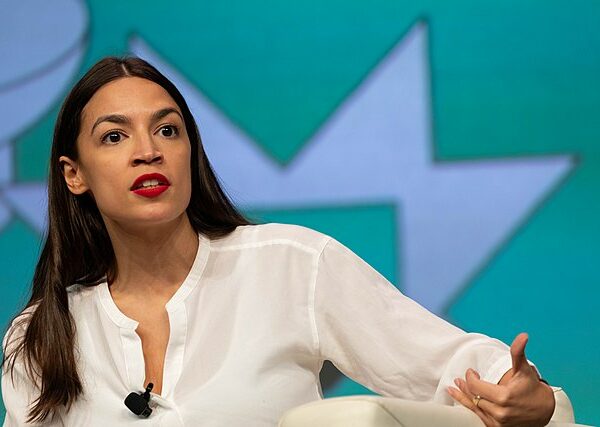
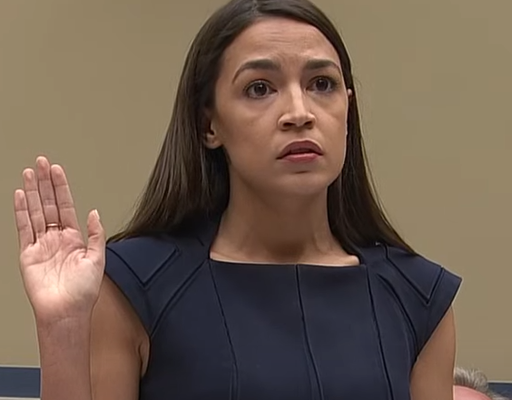
By Rep. Alexandria Ocasio-Cortez (D-N.Y.) faced sharp criticism Thursday after a halting response to a question about whether the United States would deploy troops to defend Taiwan in the event of a Chinese invasion.
The exchange took place during a panel discussion at the Munich Security Conference, the annual gathering of heads of state, defense officials, diplomats, and security leaders. When asked whether the United States “would and should” commit forces to protect Taiwan, Ocasio-Cortez paused before delivering an answer that quickly circulated online.
“Um… you know… I think that … this is… such a … I think that… this is a um… This is a very longstanding policy of the United States,” she said, according to widely shared video and transcripts reported across outlets.
🚨 Deer in the headlights: @AOC panics after being asked whether the U.S. would defend Taiwan against Communist China:
"Um… you know… I think that … this is… such a … I think that… this is a um… This is a very longstanding policy of the united states." pic.twitter.com/Noik7bRpC1
— POLARIS National Security (@PolarisNatSec) February 13, 2026
The clip drew immediate reaction. Critics characterized the moment as a failure to articulate a clear position on one of the most sensitive flashpoints in global politics.
Conservative commentators and some foreign policy observers described the exchange as evidence of inexperience. One user wrote, “She has no experience. She is not Presidential material,” while another mocked what they called “Alex Soros-level oratory.” Others labeled it a “deer in the headlights” moment, arguing that the hesitation signaled unpreparedness for high-level international engagement.
Defenders, however, argued that caution was appropriate given the stakes. As one reply noted, “Members of Congress are not supposed to freelance military commitments on camera. Hesitation here is restraint, not panic.”
That argument reflects the United States’ longstanding posture of strategic ambiguity toward Taiwan. Under the 1979 Taiwan Relations Act, Washington provides defensive arms and maintains the capacity to resist coercion, but it has never issued an explicit, unconditional pledge of military intervention.
In fuller remarks following the exchange, Ocasio-Cortez appeared to pivot toward deterrence and prevention. “We want to make sure that we never get to that point,” she reportedly said, emphasizing economic and diplomatic measures designed to avoid escalation.
Her appearance in Munich marked a significant step into international security debates for the New York congresswoman, who is more commonly associated with domestic economic and social policy. Across multiple panels, she linked widening income inequality to the global rise of authoritarianism and populist movements, arguing that democratic governments must deliver tangible economic benefits to working-class citizens in order to counter far-right appeals and maintain institutional legitimacy.
Her stumbling and bumbling over a basic question immediately contrasted with Marco Rubio’s address.
The media wanted the Munich Security Conference to be a split screen moment between clashing visions. We definitely got one.@marcorubio: “We are part of one civilization, western civilization… forged by centuries of shared history, Christian faith, culture, heritage, language,… https://t.co/pN2RkkDDtG pic.twitter.com/Hp7mlSMT9S
— Alex Bruesewitz 🇺🇸 (@alexbruesewitz) February 14, 2026
Rubio delivered a pointed but ultimately unifying address at the Munich Security Conference on Friday, arguing that the United States and Europe remain bound not merely by treaty alliances but by something deeper and older: a shared civilization.
Speaking amid visible strains in the transatlantic relationship, Rubio insisted that the two sides “belong together,” joined by “centuries of shared history, Christian faith, culture, heritage, language, [and] ancestry.” The bond, he suggested, is not transactional. It is civilizational.
Yet Rubio’s message was not nostalgic. It was the single best articulation of the Trump foreign policy agenda in history.
He argued that the post–World War II order, while initially stabilizing, gradually drifted from its founding principles. Western nations, he said, have outsourced elements of their sovereignty to sprawling international institutions, weakening democratic accountability at home. He criticized European and American energy policies that, in his view, have driven up costs and constrained growth in service of what he described as a “climate cult.” And he warned that mass migration, unmanaged and politically shielded from criticism, is eroding social cohesion, cultural continuity, and long-term demographic stability across the West.
The speech struck a chord among observers on both sides of the Atlantic. Supporters praised Rubio’s “clarity” on energy affordability and border policy, arguing that he articulated frustrations many European voters have expressed at the ballot box but feel their governments have ignored.
Online reactions from European users echoed that sentiment, with several voicing frustration over high energy prices and migration policies they believe have been imposed without sufficient public consent.
Rubio framed his critique not as a rejection of Europe but as an appeal for renewal. The United States and Europe, he argued, cannot preserve their alliance if they abandon the cultural and political foundations that made it possible in the first place.
As the Munich Security Conference continues through February 15, the exchange illustrates the choice facing Americans in the future: Rubio and the Republicans standing up for the West and American sovereignty or AOC and the Democrats standing up for…whatever that was.
[Read More: Bondi Gets Blasted By GOP]