 By
By Across America’s farm belt, a growing number of national-security officials warn that the country faces a biological vulnerability it has never seriously contemplated: hostile foreign actors could cripple core agricultural sectors without ever crossing a border or launching a conventional attack. What began as a localized plant disease in Florida now reads, in hindsight, like an early chapter in a wider pattern of biological exposure, laboratory irregularities, and covert acquisition of dangerous pathogens linked to entities based in or affiliated with China.
Florida is living with the most visible consequence. Citrus greening — a bacterial infection spread by the Asian citrus psyllid and widely believed to have originated from agricultural material tied to China — has torn through the state for nearly two decades. First detected in 2005, the pathogen has destroyed more than 70 percent of Florida’s orange acreage and forced countless groves into bankruptcy. Once-thriving communities built around commercial citrus production have lost jobs, processing plants, and generational family businesses.
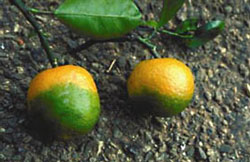
Growers describe the collapse as a slow-motion catastrophe that has hollowed out entire counties. Groves that once produced bright, healthy oranges now yield small, sour, mottled fruit unfit for commercial juicing. Trees die years before maturity. Chemical treatments offer fleeting relief at enormous cost. Federal disaster aid eases the margins but cannot restore the ecological damage or revive lost competitive capacity. Even now, the disease shows no sign of stopping.
For many growers, the devastation is more than economic. It is emotional — the erasure of an agricultural culture that defined central Florida for a century. Refrigerated tanker trucks once lined state highways during the harvest, bound for global markets. Today, entire processing facilities sit idle, and many remaining growers survive only by replanting continuously and taking on uncertain debt.
National security advisers warn that the Florida episode is not merely a natural disaster. Rather, it is a stark example of the vulnerability of American food systems to biological exposure, whether accidental, commercial, or malicious. Washington is now confronting a pattern: laboratory irregularities, unauthorized biological imports, and suspected technology theft involving pathogens that directly threaten crops and food security.
In June 2025, federal agents arrested two University of Michigan researchers who were allegedly attempting to smuggle samples of Fusarium graminearum — a destructive wheat blight fungus — out of the country. According to court documents, the samples were destined for China, and investigators treated the case as a possible agroterror incident. Months later, three additional Chinese nationals associated with academic programs in the United States were charged with illegally importing undisclosed biological materials, once again raising questions about laboratory oversight and motives.
Campus officials in Ann Arbor have acknowledged that the incidents have become too frequent to dismiss as isolated academic policy violations. A separate November 2025 investigation found still more foreign-connected operatives tied to the university, deepening concern that American universities — flush with federal research grants and lightly policed laboratory networks — are now prime targets for biological espionage and illicit pathogen acquisition.
Those concerns intensified after the discovery of an unlicensed biolab in Reedley, California in 2023, where local officials found thousands of vials containing HIV, Ebola, COVID-related material, and nearly 1,000 genetically modified mice. Investigators later traced ownership links to Chinese entities, and the House Select Committee on the Chinese Communist Party is still probing how the facility operated on American soil without disclosure, regulatory scrutiny, or biosafety accreditation.
The biological concerns extend well beyond agriculture. Cybersecurity officials report sustained hacking efforts attributed to Beijing-backed groups targeting U.S. telecommunications systems throughout 2024 and 2025. The intrusions have grown so pervasive that senior officials have been instructed to avoid personal devices for sensitive communications. Intelligence analysts believe the operations are designed to build persistent access inside infrastructure systems — a capability with implications far beyond data theft.
Taken together, the biological and cyber vectors form a single strategic picture. China is pursuing leverage inside American civilian and commercial systems: plants, pathogens, digital networks, laboratory pipelines, intellectual property, and biosurveillance blind spots. The tools are inexpensive, decentralized, and often invisible until the damage is irreversible.
Now add to that strategy another global front: the oceans. The same country whose agricultural-linked pathogens remain a national obsession also fields what many analysts view as a vast, quasi-military maritime armada. As chronicled in recent reporting by Yale Environment 360, the fishing fleet operated by People’s Republic of China has grown into a global industrial behemoth, with thousands of vessels fanning out across the Atlantic, Pacific, and Indian Oceans — many operating beyond international norms, in weakly regulated waters, or under opaque legal cover.
After depleting fish stocks near home, Chinese ships routinely sail to regions from West Africa to Latin America to target forage fish, shrimp and even endangered species such as the totoaba. Under-reported and unregulated practices have inflicted severe damage to ecosystems and local food supplies abroad, raising fears that China’s maritime ambitions — like its biological and cyber incursions — form part of a broader global strategy to project power and influence.
In Washington, some lawmakers and national-security strategists now see a connection: a global reach not merely of pathogens or code, but of supply chains — land, sea, lab, and net. The collapse of Florida’s citrus groves, the fungal smuggling arrests in Michigan, unlicensed biolabs, and a massive fishing fleet scouring the seas — all are pieces in what critics now call an interconnected challenge to U.S. economic resilience, national security, and ecological stability.
As Congress debates tighter export controls, increased biosafety oversight, and expanded sanctions, Florida’s orange groves may have become an ominous early warning. The message policymakers are hearing: in the 21st century, adversaries may not aim for tanks or jets — they may strike at farms, fisheries, and digital backbones long before any country sees a uniformed soldier.
[Read More: Jeffries Blocking Stock Trade Ban]