 By
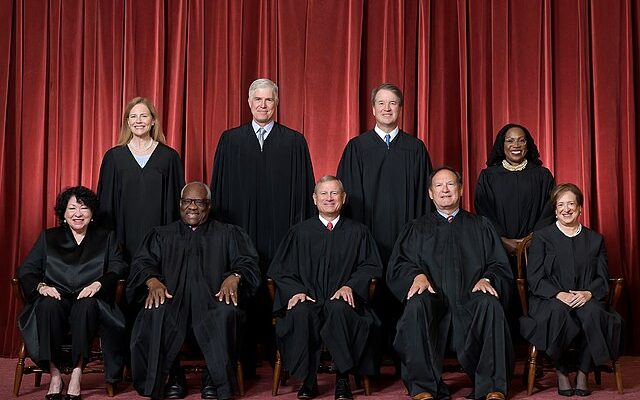
By As Supreme Court Justice Samuel Alito approaches his 20th year on the nation’s highest court, speculation is intensifying over whether the 75-year-old conservative jurist may consider stepping aside — and whether President Donald Trump could soon gain another opportunity to reshape the court.
Alito, appointed in 2006, has been a central figure in the court’s conservative transformation, often converting once-lonely dissents into controlling opinions on some of the most consequential legal questions of the era. His jurisprudence has helped redefine constitutional doctrine on abortion, voting rights, religious liberty, and campaign finance. Yet court watchers say the justice has shown signs of mounting frustration, both in his written opinions and his conduct during oral arguments.
According to CNN senior Supreme Court analyst Joan Biskupic, “Alito will also likely be the most-watched justice for anyone wondering if President Donald Trump will soon get another vacancy to fill. Trump had three appointments to the nine-member bench in his first term.”
Alito is one of the court’s two oldest members, alongside Justice Clarence Thomas, who is 77. Thomas, appointed in 1991, “has suggested that he has no intention of retiring while he is healthy,” Biskupic explained. Alito’s posture appears more ambiguous. “Alito, on the other hand, has pondered a possible retirement, according to people close to him,” she reported. “But he has not signaled any eagerness to leave.”
The justice’s most defining legacy remains his authorship of the 2022 decision that overturned Roe v. Wade, dismantling nearly half a century of federal abortion protections. Beyond abortion, Alito has shaped recent rulings involving electoral maps, including opinions that narrowed racial gerrymandering claims in cases affecting South Carolina and Texas — outcomes that favored Republican-backed maps.
Inside the courtroom, Alito has developed a reputation for sharp questioning and visible impatience. He frequently interrupts attorneys, sometimes cutting them off mid-response. In one tense exchange, after a lawyer asked to finish a thought, Alito replied: “On that hypothetical, three or four sentences later.…”
Alito has also forcefully defended controversial precedents. Addressing criticism of the Citizens United campaign finance ruling, he once said it was “much maligned, I think unfairly maligned,” noted Raw Story.
Outside the courtroom, the justice has faced sustained media scrutiny over ethics issues, including reports of undisclosed travel and a fake controversy after his wife flew a Revolutionary War flag at one of their homes. Alito wrote off the Democrats who called for him to step aside, saying: “A reasonable person who is not motivated by political or ideological considerations or a desire to affect the outcome of Supreme Court cases would conclude that this event does not meet the applicable standard for recusal,” Alito responded Wednesday. “I am therefore duty-bound to reject your recusal request.”
President Trump has publicly indicated that he prefers Alito to remain on the bench. Alito, for his part, has frequently aligned with the administration in high-profile dissents, including objections to a ruling that temporarily blocked certain deportation policies.
With major cases expected in 2026 involving transgender rights, religious accommodations, and the scope of executive authority, Alito remains a pivotal figure in the court’s ideological balance. Whether he ultimately chooses to retire — and when — could have lasting consequences for the court’s direction and for the president’s legacy in shaping American law.
[Read More: Iran President Says He’s At War]