 By
By The NAACP is urging Black athletes and their supporters to reconsider commitments to public colleges and universities in several Southern states, arguing that recent redistricting efforts threaten to weaken Black voting power while universities continue to benefit from Black athletic talent.
The national campaign, announced Monday, targets institutions in states where lawmakers have moved quickly to redraw electoral maps following a recent Supreme Court ruling that the civil rights organization says weakened protections under the Voting Rights Act, according to a new report. The NAACP is calling on athletes to withhold athletic and financial support from programs in those states unless universities take a public position against what the group describes as racial vote dilution.
NAACP President and CEO Derrick Johnson said the organization would not ignore the connection between college sports revenue and political power in the states where those schools operate.
“These actions happened in days, in some cases in hours, of a Supreme Court ruling that gives extremist lawmakers a playbook to erode Black representation. The NAACP will not watch the same institutions that depend on Black athletic prowess to fill their stadiums and their bank accounts remain silent while their states strip Black communities of their voice.”
The initiative encourages prospective Black athletes and recruits to avoid targeted programs in the South, ask coaches and athletic directors where their universities stand on voting rights, and give serious consideration to Historically Black Colleges and Universities.
The NAACP has launched a campaign calling for college athletes and fans to withhold athletic support from public universities in Tennessee, Louisiana, Alabama, Florida, Mississippi, South Carolina, Texas & Georgia due to Black voting representation.
It calls for athletes to… https://t.co/QZAdIRYdbK
— Pete Nakos (@PeteNakos) May 19, 2026
The NAACP is also urging current college athletes “to use their platforms to elevate the issue, to ask institutional leadership for public statements opposing racial vote dilution, and to consider all available options under the transfer portal.”
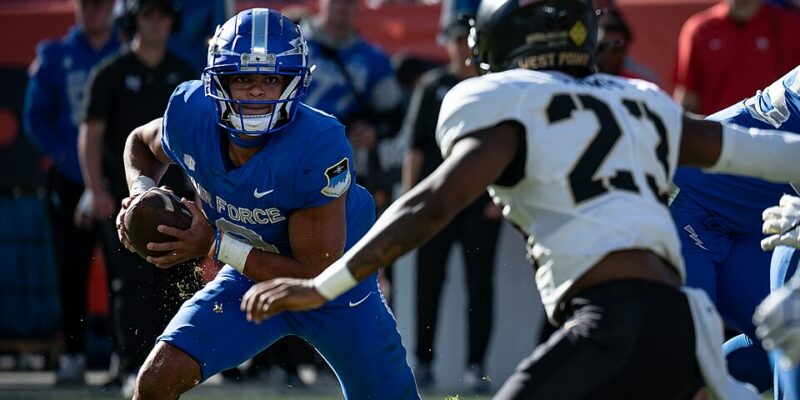
The campaign places college athletics at the center of a broader fight over redistricting and political representation. Black athletes make up a large share of the talent base in the highest-profile college sports, especially football and men’s basketball, where Southern universities have built some of the most lucrative programs in the country.
A 2020 study by the National College Players Association, with researchers from Drexel University and Harvard, found that more than half of all Division I basketball and football players are Black. The study estimated that the economic value of those athletes at major Southern schools exceeded $1.5 million over a four-year period.
The study also argued that the structure of college athletics has shifted substantial wealth away from athletes and toward institutions and administrators.
“After accounting for the value of college athletes’ athletic scholarships between 2017-2020, approximately $10 billion in generational wealth will have been transferred from college football and men’s basketball players, the majority of whom are athletes of color, to coaches, athletics administrators, and college administrators who are predominantly White or to institutions and programs that serve majority White constituencies.”
The NAACP is extending the campaign beyond athletes. The organization is calling on fans, alumni, donors, and consumers to redirect spending away from tickets, merchandise, and licensed apparel tied to the targeted schools. It is encouraging support instead for HBCU athletic programs, scholarship funds, NIL collectives, bands, and alumni foundations.
The effort has also drawn attention from Democratic lawmakers. Rep. Marc Veasey of Texas, who is retiring, suggested that athletes consider organizing against schools in the Southeastern Conference, where several states have become central to disputes over redistricting.
In a social media post last week, Veasey wrote, “Black athletes are the only students on campus bringing in billions of outside dollars! You can’t compare them to other students! Would be ridiculous to do so! Disrespecting Black men/women is suggesting we continue to perform/view for audiences that don’t respect us.”
The campaign comes as college sports remain entangled with larger debates over athlete compensation, NIL money, transfer rights, and the political influence of universities in the South. For the NAACP, the argument is that schools cannot profit from Black athletes while remaining silent about state policies that the organization says diminish Black political power.
[Read More: Socialist ‘Liberation Centers’ Coming To A City Near You]