 By
By What was meant to be a funeral for one of the civil rights movement’s most recognizable figures quickly took on the tone of something else—a political rally, complete with familiar grievances and an unmistakable fixation on President Donald Trump.
At Chicago’s House of Hope church on Friday, March 6, 2026, thousands gathered to mourn Rev. Jesse Jackson Sr., the longtime activist, presidential candidate, and founder of the Rainbow PUSH Coalition who died in February at age 84 after a battle with progressive supranuclear palsy. But as Democratic political heavyweights took the podium, the service repeatedly shifted from remembrance into pointed commentary on the nation’s current political leadership.
Former President Barack Obama led the charge.
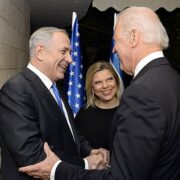
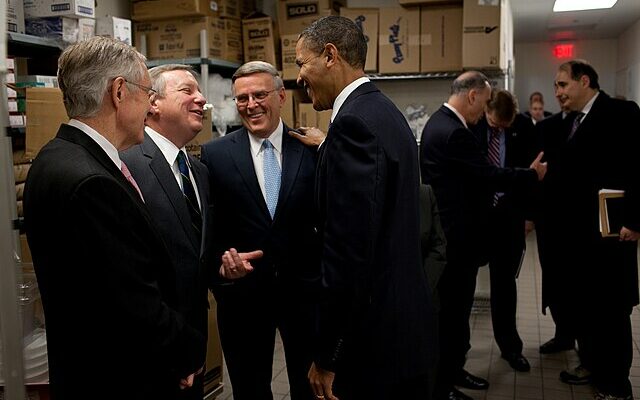
Standing before a crowd that included former Presidents Joe Biden and Bill Clinton, along with prominent Democratic officials and civil rights leaders, Obama used his eulogy to deliver a sweeping critique of the country’s political climate.
“We are living in a time when it can be hard to hope,” he said. “Each day we wake up to some new assault on our democratic institutions. Another setback [to] the idea of the rule of law. An offense to common decency.”
Obama whips out his MLK impersonation to pander to his majority black audience and attack Trump at Jesse Jackson’s funeral.
Do politicians think people can’t see through this?
Follow: @WallStreetMav pic.twitter.com/0keXQuiD2O
— Wall Street Mav (@WallStreetMav) March 6, 2026
He continued: “Every day you wake up to things you just didn’t think were possible. Each day, we’re told by those in high office to fear each other, and to turn on each other. And that some Americans count more than others. And that some don’t even count at all. Everywhere we see greed and bigotry being celebrated and bullying and mockery masquerading as strength.”
Obama did not mention Trump by name, but the implication was obvious. The former president framed the current moment as one of democratic peril—a theme that has become a recurring motif in Democratic rhetoric since Trump returned to office.
Obama acknowledged the difficulty of maintaining optimism under such circumstances, stating that “it’s hard to hope in those moments.” He then invoked Jackson’s legacy as a call to action, saying the late reverend “inspires us to take a harder path. His voice calls on each of us to be heralds of change, to be messengers of hope”—language that echoed the themes of Obama’s own presidential campaign.
If the tone of the service had not yet tipped fully into political territory, the next speaker removed any remaining ambiguity.
Former Vice President Kamala Harris followed Obama with remarks that turned the funeral into a complaint about the current administration.
Remember when Trump talked shit on Rob Reiner the day he died, and liberals were all fake outraged? Now Kamala Harris and Joe Biden used Jesse Jackson’s actual funeral service to dunk on Trump. You still outraged now, libs?
— 🇺🇸 MAGA Michelle S 🇺🇸 (@MAGAMichelleS69) March 6, 2026
Only former President Bill Clinton resisted the gravitational pull of present-day politics. Clinton, who awarded Jackson the Presidential Medal of Freedom in 2000, kept his remarks focused on Jackson’s decades of activism and influence without launching into criticism of current leaders.
Bill Clinton gets emotional when talking about his friendship with Rev. Jesse Jackson at the memorial service:
"I'm here more as a friend than a former president. He was my friend when I needed it. And I ask you to ask yourself how you can do more by being a better friend and a… pic.twitter.com/nD43xzr8qj
— Art Candee 🍿🥤 (@ArtCandee) March 6, 2026
Jackson himself loomed large over the proceedings. A protégé of Dr. Martin Luther King Jr., he became one of the most visible civil rights figures of the late twentieth century, running for president twice and building the multiracial coalition that would later help propel Obama to the White House in 2008.
President Trump did not attend the service.
Following Jackson’s death, Trump offered a brief tribute on Truth Social, describing the civil rights leader as “a force of nature like few others before him.” Trump also noted Jackson’s role in Obama’s political rise before concluding simply: “Jesse will be missed!”
For many in attendance, the day was meant to honor a complicated but consequential life.
Yet as the speeches unfolded, the ceremony increasingly reflected a broader pattern in modern Democratic politics: even moments of mourning become platforms for political messaging. They can’t help it, Donald Trump has become their moon and stars—the only thing they ever think about.
[Read More: House Backs Down On Major Trump Program]