 By
By Liberal regulators in California have found another way to make an everyday necessity more expensive. As one of the largest consumer markets in the world, drivers thousands of miles from Sacramento could eventually feel the consequences.
The California Energy Commission voted unanimously Monday to impose the nation’s first energy-efficiency standards on replacement tires, regulations that could eventually eliminate an estimated 70 percent of tires currently sold in the state.
The new rules are ostensibly designed to save drivers money by requiring tires with lower “rolling resistance,” meaning less energy is needed to move a vehicle down the road. But tire manufacturers warn the mandate could dramatically shrink consumer choice and raise the upfront cost of replacing one of the most basic — and unavoidable — components of owning a car.
“This ultimately is about protecting consumers,” said David Hochschild, the chairman of the California Energy Commission. “I see this as sheltering the public from higher costs in the long run.”
That is a familiar argument from California policymakers: restrict consumer choices today and promise that the added regulation will save them money tomorrow.
The regulations will be implemented in two stages. Beginning in 2029, replacement tires sold in California will generally be required to meet a maximum rolling resistance of 9.1 newtons per kilonewton. In 2033, the standard will tighten to 7.2 N/kN.
The commission says the rules are intended to make replacement tires roughly as efficient, on average, as the tires installed on new vehicles. State regulators estimate the standards could eventually save California drivers nearly $1 billion annually in gasoline and electricity costs while reducing carbon dioxide emissions.
Commission staff projects that under Phase 1, motorists could recoup added tire costs through approximately $79 in fuel or electricity savings within four months. Phase 2 could produce roughly $153 in savings within seven months.
“These regulations are a tool within our authority that can save money for every Californian,” said Commissioner Nancy Skinner.
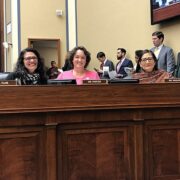
Skinner’s role has attracted particular attention from California conservatives. California Globe, a conservative state news outlet, blasted the former Democratic state senator over the new mandate, portraying the tire regulations as the latest example of Sacramento searching for new ways to regulate driving because the state “can’t ban cars.”
Radical California Energy Commissioner to Restrict Car Tires Because They Can’t Ban Cars.
Nancy Skinner is the same lawmaker who tried to ban Bullets when she couldn’t ban your guns.@CaliforniaGlobe 👇article link👇 pic.twitter.com/43BtPPNJnm
— California Globe (@CaliforniaGlobe) August 18, 2026
The criticism also reflects Skinner’s political history. Before Gov. Gavin Newsom appointed her to the Energy Commission in 2025, Skinner spent years in the Legislature championing progressive environmental policies and gun-control measures, including California’s red flag law. Critics of her firearms policies have long accused her of attempting to restrict access to guns and ammunition. Now, as an energy commissioner, she is helping determine which replacement tires Californians will be allowed to buy.
Skinner and the commission frame the tire mandate as a consumer-protection measure. But the tire industry is considerably less optimistic.
Bret Gladfelty, representing Goodyear, warned regulators that the standards would increase costs while leaving significant technical and legal questions unresolved. The commission estimates Phase 2 would increase the average price of a tire by approximately $6.50, but Gladfelty argued in a letter to the agency that actual increases could reach hundreds of dollars.
He also told KCRA 3 that the 2033 standard could eliminate an estimated 70 percent of tires currently sold in California.
That matters far beyond the Golden State.
California’s enormous economy gives Sacramento unusual power over national markets. Manufacturers do not necessarily design separate products and supply chains for nearly 40 million California consumers. When the state imposes sufficiently demanding product standards, companies can have a strong incentive to alter what they manufacture and sell nationwide rather than maintain a separate California market.
The phenomenon is sometimes called the “California effect”: regulations adopted in Sacramento can effectively become national standards even when Congress never enacted them. That’s why the leftwing push to ban gas vehicles and put governors on cars started in the once “Golden State.”
That means a regulation sold as a way to save Californians money could ultimately affect the price and selection of replacement tires available to drivers in Michigan, Texas, Florida and virtually everywhere else.
And tires are not an optional purchase. Drivers can postpone buying a new television, refrigerator or smartphone. They cannot safely drive forever on worn-out tires. If California regulations push less expensive options out of the market, working- and middle-class motorists will have little choice but to pay whatever the compliant replacements cost.
Other manufacturers, including Bridgestone and Michelin, raised concerns about how the rules will be enforced, warning that inconsistent enforcement could put larger manufacturers at a competitive disadvantage. Commission staff said California intends to verify manufacturers’ claims through independent laboratory testing and retailer inspections.
The regulation contains numerous exemptions, including certain snow tires, motorsports tires, used and retreaded tires, deep-tread tires, motorcycle tires, ATV and off-road tires, temporary spare tires, some small tires, limited-production tires, emergency-vehicle tires and several other specialized categories.
The policy itself has been more than two decades in the making.
California lawmakers passed Assembly Bill 844 in 2003, directing the Energy Commission to investigate tire-efficiency standards. The commission had never previously regulated tires, and California will now become the first state to do so.
Hochschild said he had not even been aware of the decades-old law until Skinner raised it.
“If I had been on the commission 20 years ago, maybe it wouldn’t have taken so long,” Skinner said. When asked why regulators had waited so long, she added that “there may not have been those cost pressures.”
Those cost pressures are precisely why the regulation could prove politically combustible. Californians already contend with extraordinarily high housing, energy and transportation costs. Now state regulators are moving to narrow the universe of replacement tires residents can purchase while assuring them the restrictions will eventually put money back in their pockets.
And California’s regulatory decisions rarely stay neatly inside California.
The state is simply too large a market for manufacturers to ignore. When Sacramento changes the rules for cars, appliances, fuel, emissions or consumer products, national companies often have to decide whether maintaining a separate California supply chain is worth the expense. Sometimes it is easier to change the product everywhere.
That is how a five-member commission in Sacramento can end up raising the price of goods for the rest of us.
California liberals may insist they are merely making tires more efficient. But the broader pattern is familiar: regulate more, restrict choices and promise consumers that government knows how to save them money.
This time, the rest of America may end up paying for the experiment too.
[READ MORE: Swalwell Tried To Keep It Secret]