 By
By Cuba may be economically collapsing, but the communist regime has apparently invested heavily in one export that remains remarkably successful: radical left-wing politics.
A sweeping new State Department report accuses Havana of spending nearly seven decades building an international network that combines espionage, propaganda, political organizing, ideological recruitment and support for revolutionary movements.
The 64-page assessment portrays Cuba not as an isolated Caribbean dictatorship, but as a central hub connecting hostile foreign governments with activist organizations operating inside the United States.
For more than six decades, the Cuban regime has been the leading sponsor of radical leftism and Third Worldism in the United States.
The State Department is exposing the full history of Cuban espionage and subversion in our country.
The American people deserve to know.…
— Secretary Marco Rubio (@SecRubio) July 20, 2026
“The report finds that for nearly seven decades, the Cuban regime has played an indispensable role in nearly every notable far-left insurgency, revolution and militant movement across and beyond the Western Hemisphere,” a State Department official said.
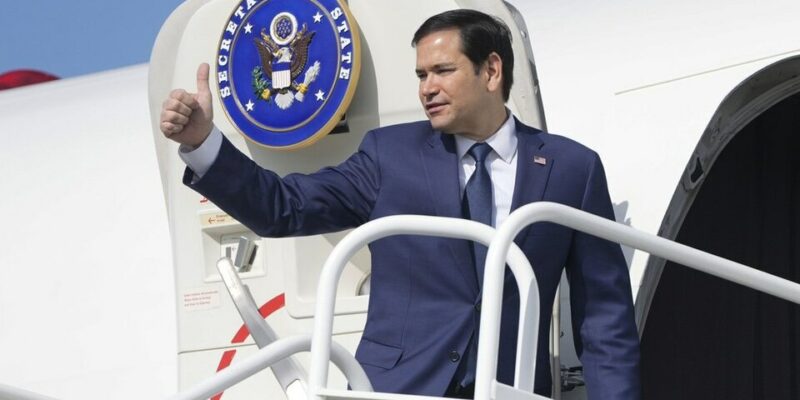
The report was released days after Secretary of State Marco Rubio hosted representatives from more than 60 countries for a ministerial meeting on the resurgence of political terrorism. Rubio told attendees that governments have spent years overlooking the international infrastructure supporting violent and revolutionary movements on the left.
“The Cuban regime’s sprawling intelligence and ideological networks helped build the far-left in our country and in our hemisphere,” he said, “and it remains inextricably linked to far-left groups and movements across and beyond the West.”
President Donald Trump laid the groundwork for the administration’s campaign against Havana in a January 29 executive order declaring Cuba an “unusual and extraordinary threat” to American national security. The order accused Cuba of expanding intelligence and defense cooperation with China, hosting Russian intelligence capabilities and supporting hostile governments and terrorist organizations. Trump followed that action with additional sanctions in May.
Cuban officials have rejected the administration’s allegations and maintain that the island poses no danger to the United States.
The new report argues otherwise.
According to the State Department, Cuba’s deteriorating power grid, shortages and failing state-run economy conceal one of the most sophisticated foreign influence operations in the world. Havana’s strategy allegedly erases the customary boundaries between espionage, propaganda, diplomacy and domestic political activism.
“Other hostile regimes have stolen American secrets, financed terrorism, armed proxies, spread propaganda, or sought to cultivate political influence inside the United States,” the document states. “Cuba did — and does — all these things and more; but the Cuban regime has never recognized the neat distinctions that so often structure the American government’s understanding of foreign threats.”
The report describes Havana as “the ideological capital of the modern radical left.”
That designation matters because many of the organizations named in the report have already appeared in separate investigations involving other American adversaries.
As New Conservative Post previously reported, the State Department accused Code Pink and the People’s Forum in February of operating within a nonprofit and donor network that advances narratives favorable to the Chinese Communist Party. Both organizations have participated in protests against Israel, American policy toward Iran and immigration enforcement. Code Pink has denied receiving money from the Chinese government or maintaining contact with the Chinese Communist Party.
The new Cuba report identifies Code Pink, the People’s Forum, the National Network on Cuba and the Democratic Socialists of America as organizations with ties to Havana’s ideological or activist network.
The overlap is difficult to ignore.
American activist groups that defend China, Iran, Cuba and other anti-American governments routinely appear together at the same protests, promote similar narratives and describe hostile Marxist regimes as victims of the United States.
The State Department’s assessment does not mean every person attending one of those protests is knowingly working for Cuba. It does, however, argue that Havana has spent decades creating organizations, exchange programs, travel opportunities and ideological networks capable of influencing American political movements in order to create a caste of useful idiots.
The Trump administration sanctioned the institute and Amistur in June, describing the organization as a central component of Cuba’s international influence operation. The State Department said the institute claims relationships with more than 2,000 organizations across more than 150 countries.
The department described the institute as maintaining “an outsized footprint across the United States, trafficking in vile anti-American propaganda, cultivating pro-Havana regime activists and politicians, and lobbying federal, state and local politicians on behalf of the Cuban dictatorship.”
Secretary Rubio also terminated the legal status of former institute official Carlos Antonio Lloga Dominguez. Federal agents took Lloga Dominguez, his wife and his son into custody in late June pending their removal from the United States. The State Department accused him of maintaining ties to Cuba’s transnational influence network after spending more than a decade working for the institute.
The political reach of the network is becoming increasingly significant, particularly as the DSA takes over the Democratic Party.
The Cuba report suggests that this ideological movement did not develop entirely within the United States. According to the department, Havana spent generations identifying sympathetic students, activists and intellectuals, cultivating them over time and helping create the political infrastructure through which revolutionary ideas could enter American institutions.
Cuba used a similar long-term strategy for traditional espionage.
Former Ambassador Victor Manuel Rocha admitted that he secretly served Cuba beginning in 1973 while rising through sensitive positions in the State Department and National Security Council. He received the maximum sentence of 15 years in prison in 2024.
hose cases demonstrate why Cuba’s ideological operations cannot be separated neatly from its espionage activities. Sympathy for the regime can become the first stage of recruitment long before a target obtains a security clearance or influential government position.
“Cuba created one of the most sophisticated and adept espionage and subversion operations in the world – almost singularly focused on penetrating and undermining the United States,” the report concludes.
The assessment claims that intelligence collected by Havana is shared with governments including Russia, China and Iran, giving multiple American adversaries access to information gathered through Cuba’s longstanding operations.
The report describes the effort as a “war of attrition” against American power, one that they may be winning, at least inside the Democratic Party.
[Read More: Federal Building Attacked]