 By
By A new report is adding hard numbers to one of the most contested questions in American immigration policy.
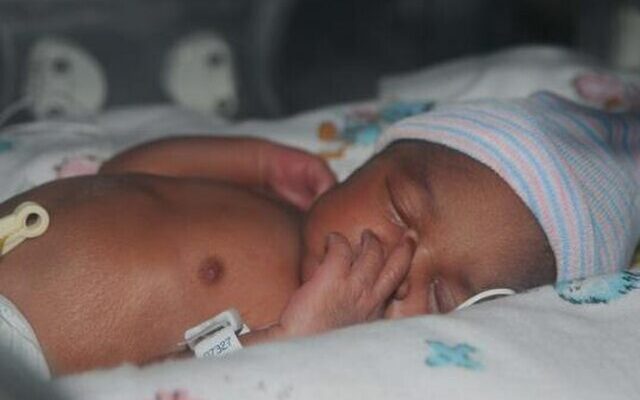
The Pew Research Center estimates that in 2023 roughly 320,000 babies—about 9 percent of the nation’s 3.6 million births—were born to mothers who were either in the country illegally or present on temporary visas. The figures, released March 31, draw on Census Bureau data and federal birth records and offer one of the clearest snapshots yet of how immigration status intersects with U.S. birth trends.
🚨BREAKING: It has just been revealed that 320,000 children, nearly 9% of all U.S. births, were born to unauthorized or temporary migrant mothers.
Holy smokes… pic.twitter.com/YLA5nrrBBf
— Jack (@jackunheard) April 1, 2026
The analysis arrives at a moment when the legal framework governing those births is under direct challenge.
Under an executive order signed by Donald Trump on the first day of his second term, federal agencies have been directed to deny automatic citizenship to children born in the United States to parents who are unauthorized immigrants or in the country on temporary visas. Pew estimates that about 260,000 of the 2023 births would not qualify for citizenship under that policy, including roughly 245,000 cases in which neither parent was a U.S. citizen or lawful permanent resident.
That order now sits at the center of a high-stakes constitutional fight before the Supreme Court of the United States.
In Trump v. Barbara, argued April 1, the justices are weighing whether the administration’s interpretation of the 14th Amendment’s Citizenship Clause can withstand more than a century of legal precedent. The amendment, ratified after the Civil War, guarantees citizenship to those “born or naturalized in the United States, and subject to the jurisdiction thereof”—language the administration argues was never meant to include the children of what it calls “temporary sojourners” or those in the country unlawfully.
Lower courts have uniformly rejected that view, blocking the order as unconstitutional and forcing the issue to the Supreme Court.
The administration’s argument draws in part on older cases such as The Slaughter-House Cases and Elk v. Wilkins, which explored the limits of citizenship in the post–Civil War era. But challengers say the controlling precedent remains United States v. Wong Kim Ark (1898), in which the Court affirmed birthright citizenship for a child born in San Francisco to non-citizen parents legally residing in the country.
Randy Barnett, one of the leading scholars of the 14th Amendment, recently explained in The Wall Street Journal that “Trump is right on birthright citizenship.”
President Trump’s executive order denying birthright citizenship to U.S.-born children of nonresident aliens goes before the Supreme Court Wednesday, and conventional wisdom has it that the president will lose in Trump v. Barbara. If the court stays true to the original meaning of the 14th Amendment’s Citizenship Clause, however, the conventional wisdom will prove wrong.
The clause grants citizenship to persons who meet two conditions: birth in the U.S. and being “subject to the jurisdiction” of the U.S. The dispute is over the meaning of the latter term. Everyone agrees that it excludes at least three classes: children of diplomats, of soldiers from an invading army, and of American Indians maintaining tribal relations. In each of these categories, the status of the child depended on the status of the parent.
Opponents of the executive order claim that “jurisdiction” simply refers to the applicability of ordinary civil and criminal laws. They invoke U.S. v. Wong Kim Ark (1898), in which the high court granted birthright citizenship to a man born to Chinese parents. They read Wong Kim Ark and other sources as having incorporated British common-law doctrine deeming anyone born in the British Empire a subject of the crown. But Ilan Wurman of the University of Minnesota has shown that the common-law materials are more complicated. The older cases and treatises turned not simply on place of birth, but on protection, allegiance and the sovereign’s acceptance of the parents’ presence. Mr. Wurman also shows that the status of temporary sojourners was contested by the 19th century.
Most important, Wong Kim Ark’s parents weren’t in the U.S. illegally or temporarily. As Justice Gray put it for the court: “The question presented by the record is whether a child born in the United States, of parents of Chinese descent, who, at the time of his birth, are subjects of the Emperor of China, but have a permanent domicil and residence in the United States, . . . becomes at the time of his birth a citizen of the United States by virtue of the first clause of the Fourteenth Amendment of the Constitution.”
The government isn’t asking the court to disturb Wong Kim Ark’s treatment of children born to lawful permanent residents—who nowadays have green cards. Mr. Trump’s executive order maintains birthright citizenship for the children of green-card holders while excluding those whose parents are in the U.S. illegally or on nonresident visas.
The lawsuit is being led by the American Civil Liberties Union and allied groups, who argue the executive order would overturn settled law and create widespread uncertainty about citizenship status. They warn it could require parents to prove their own legal status at the time of a child’s birth, effectively introducing a new administrative regime for determining citizenship.
The April 1 arguments drew additional attention when Trump attended the proceedings in person—an unusual move for a sitting president. During the session, several justices, including some appointed by Trump, pressed government lawyers on whether the policy would align with longstanding statutory and constitutional interpretations, and how it could be implemented without sweeping practical consequences.
A ruling is expected by early summer.
The broader debate, however, is already being shaped by the underlying numbers.
Pew’s findings provide scale to an issue often discussed in abstract terms, linking immigration policy directly to birth trends and, by extension, to long-term demographic and fiscal questions. Critics of current law point to the costs associated with healthcare, education, and public services tied to these births, while defenders emphasize constitutional continuity and the risks of redefining citizenship by executive action.
With the unauthorized immigrant population estimated at roughly 14 million in 2023, the Court’s decision will not only resolve a legal dispute—it will determine the future of America.
[Read More: Trump Deploys Post Office To Protect Our Votes]