 By
By A network of pro-Trump activists, working in what they describe as coordination with White House officials, is advancing a 17-page draft executive order that would declare a national emergency over alleged foreign interference in U.S. elections—an extraordinary step that could test the outer limits of presidential power.
The proposal centers on claims of Chinese involvement in the 2020 presidential contest and argues that such interference justifies emergency measures. Supporters contend that a national emergency declaration would allow the president to address what they characterize as systemic vulnerabilities, including mail-in ballots and certain voting machines that they believe could serve as channels for foreign influence.
At the center of the effort is Peter Ticktin, a Florida attorney who attended New York Military Academy with Trump and later served on his legal team in a dismissed 2022 lawsuit tied to Russia collusion allegations, writes The Washington Post. Ticktin openly acknowledges the constitutional tension embedded in the proposal.
“Under the Constitution, it’s the legislatures and states that really control how a state conducts its elections, and the president doesn’t have any power to do that,” Ticktin said. “But here we have a situation where the president is aware that there are foreign interests that are interfering in our election processes. That causes a national emergency where the president has to be able to deal with it.”
The draft order would treat mail ballots and voting equipment as potential conduits for foreign meddling. Ticktin said he has had “certain coordination” with White House personnel but declined to elaborate further, citing security concerns.
The White House has not confirmed any imminent executive action. A White House official noted that staff routinely engage with outside advocates who offer policy proposals, emphasizing that conversations about potential presidential moves remain speculative.
President Donald Trump, however, has publicly signaled that he is preparing to act. On February 13, he wrote: “I have searched the depths of Legal Arguments not yet articulated or vetted on this subject, and will be presenting an irrefutable one in the very near future. I will be presenting them shortly, in the form of an Executive Order.”
The push aligns with broader administration efforts focused on election integrity. Director of National Intelligence Tulsi Gabbard is leading a review of foreign influence in U.S. elections. A 2021 intelligence assessment concluded that China had considered influencing the 2020 race but ultimately did not move forward with such efforts.
Supporters of the draft order argue that prior executive actions offer precedent. In 2018, the federal government issued an order authorizing sanctions against foreign actors targeting U.S. election systems, a framework later extended by subsequent administrations. Last March, Trump signed an order requiring proof of citizenship for voter registration and directing that federal funds be withheld from states accepting late mail ballots. Courts have blocked portions of that directive, and litigation continues.
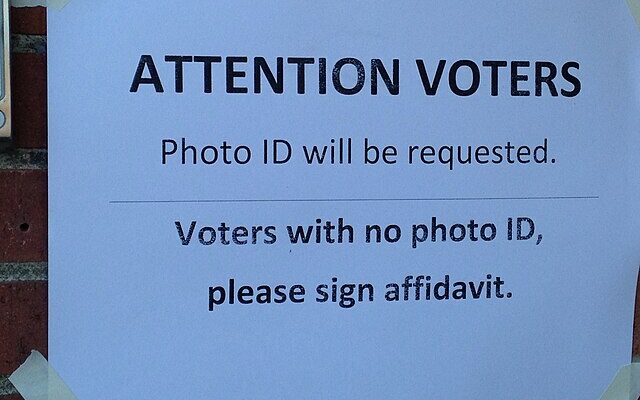
On Capitol Hill, Trump has pressed Republicans to pass the Save America Act, legislation that would mandate proof of citizenship for voter registration and photo identification for voting. The bill passed the House but remains stalled in the Senate, where GOP leaders have resisted procedural changes needed to advance it.
White House spokeswoman Abigail Jackson defended the administration’s broader approach. “President Trump is committed to ensuring that Americans have full confidence in the administration of elections, and that includes totally accurate and up-to-date voter rolls free of errors and unlawfully registered non-citizen voters. The President has urged Congress to pass the SAVE Act and other legislative proposals that would establish a uniform standard of photo ID for voting, prohibit no-excuse mail-in voting, and end the practice of ballot harvesting.”
The constitutional stakes are considerable. Article I, Section 4 assigns primary authority over election regulations to state legislatures and Congress. The Constitution does not explicitly grant the president direct control over election administration, and no prior emergency declaration has been used to assert federal authority over voting procedures in this fashion. Any such move would almost certainly face immediate legal challenges.
Democrats are already framing the draft order as an assault on democratic norms. Sen. Mark R. Warner the top Democrat on the Senate Intelligence Committee, warned: “We’ve been raising the alarm for weeks about President Trump’s attacks on our elections and now we’re seeing reports that outline how they may be planning to do it.” He added, “This is a plot to interfere with the will of voters and undermine both the rule of law and public confidence in our elections.”
Public opinion polls have shown that Americans heavily support showing an ID for voting.
Americans agree with Nicki Minaj when it comes to voter id.
83% of favor photo voter id to vote per Pew. This includes 70%+ of Democrats and Republicans, as well as 75%+ of Americans across races…. White, Black, and Latino.
It's not controversial. pic.twitter.com/9Kocw85Uh8
— (((Harry Enten))) (@ForecasterEnten) February 3, 2026
Despite the support, Democrats have refused to vote on the SAVE Act, a measure that would require proof of citizenship and an ID to vote. They have even gone as far as threatening to shutdown the government to prevent the vote from happening.
[Read More: Will He Be Tried For Treason?]