 By
By She will be “unburdened by what has been,” apparently. Former Vice President Kamala Harris has taken a series of high-profile steps in recent days that political observers say point toward a potential 2028 presidential run, even as some Democratic leaders privately question her general election prospects.
Harris continues to lead or rank near the top in early polling for the Democratic nomination, three years ahead of the next presidential contest, writes Axios. Her standing is buoyed in large part by enduring support among Black voters, a core constituency in recent Democratic primaries, despite lingering concerns among donors and party insiders about her broader electoral appeal.
Speculation about her future plans has intensified following the expansion of her national book tour promoting 107 Days, a memoir recounting her abbreviated 2024 presidential campaign. Newly added dates in 2026 include stops in early primary states and cities with large Black populations, including South Carolina, Detroit, Jackson, Mississippi, Memphis, Tennessee, and Montgomery, Alabama.
Harris and her husband, Doug Emhoff, also made a notable appearance at the Democratic National Committee’s winter meeting in Los Angeles, where they mingled with party officials and state chairs. During a reception, DNC Chair Ken Martin introduced Emhoff and jokingly suggested he could one day serve as first gentleman.
In a Friday address to DNC members, Harris struck a markedly sharper tone than during her 2024 campaign, offering a broad critique of the political system. “Both parties have failed to hold the public’s trust,” Harris said. “Government is viewed as fundamentally unable to meet the needs of its people…. People are done with the status quo and they’re ready to break things to force change.”
Attendees noted the contrast with her earlier messaging, which often aligned closely with then-President Joe Biden.
Harris spokesperson Kirsten Allen said the former vice president “will approach 2026 with the same commitment that anchored 2025 — listening to the American people, reflecting where leadership has fallen short, and helping shape the path forward beyond this political moment.” Allen added that the effort includes “supporting efforts to win back Democratic majorities in the House and Senate.”
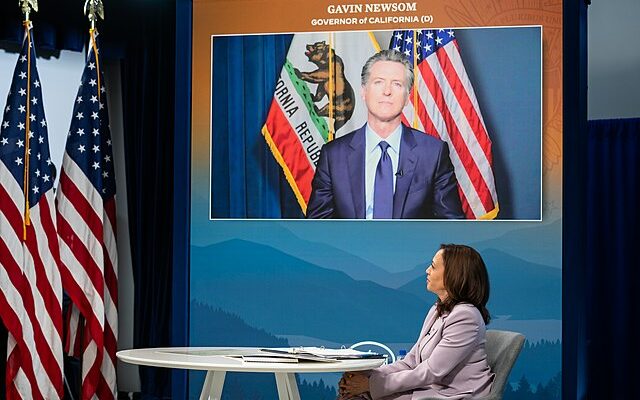
At the same time, Axios noted, California Gov. Gavin Newsom—widely viewed as an early favorite for the 2028 Democratic nomination—is facing growing scrutiny from operatives aligned with other potential contenders.
Discussions among more than two dozen Democratic strategists and aides have focused on perceived vulnerabilities for Newsom, including concerns that he is seen as a progressive “coastal elite” whose record and political style may not translate well outside California.
Critics have pointed to past controversies, including a 2007 affair during his tenure as San Francisco mayor involving a subordinate and his 2020 attendance at a lobbyist’s birthday dinner at the French Laundry restaurant while strict COVID-19 restrictions remained in place statewide.
Some Democratic figures have begun airing criticisms more openly, including references to recent corruption charges against a former Newsom aide. A Newsom advisor dismissed the maneuvering as premature, emphasizing that the governor remains focused on the 2026 midterm elections and Democratic efforts to regain control of Congress.
None, however, have noted that only one house has been rebuilt since the devastating Palisades Fire that burned nearly a year ago, as liberal restrictions on building have made it nearly impossible to rebuild, while millions in aid money were simply taken by liberal activists. California has also been accused of hiding the true origins of the wildfires.
Recent polling has shown Newsom and Harris neck and neck for the Democratic nomination.
As the contours of the 2028 race slowly emerge, the parallel positioning by Harris and Newsom underscores an increasingly competitive and unsettled Democratic field, with rival factions already testing narratives well ahead of the next presidential cycle.
[Read More: An Old Enemy Has Returned]