 By
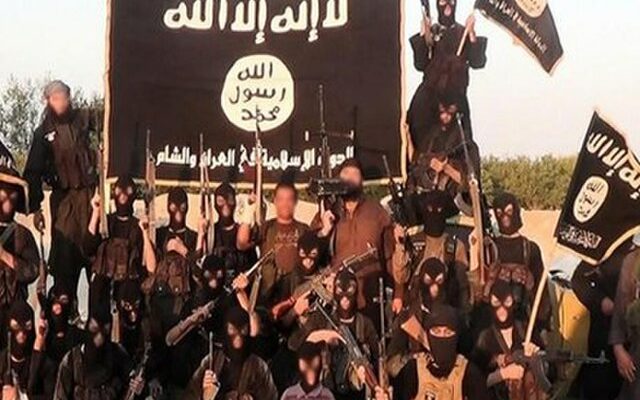
By It’s an evil that seems to have risen from the dead like a zombie. The reappearance of the black flag of Islamic State at the site of a mass-casualty attack in Australia has renewed concerns among counterterrorism officials about the group’s continued ability to inspire violence worldwide, even in the absence of centralized direction or territorial control.
Authorities say ISIS flags were discovered following a shooting at a Hanukkah event on Bondi Beach in Sydney that left 15 people dead and injured many others. The presence of the symbols, investigators say, points to ideological inspiration rather than operational coordination, a pattern increasingly common in recent years.
Bruce Hoffman, a senior fellow for counterterrorism at the Council on Foreign Relations, described the group’s transformation to The Washington Post, saying the Islamic State has gone “from being a governing authority that shocked the world” to an organization that has “reverted to its DNA as a terrorist group that controls no territory but still counts thousands of members.”
Although the U.S.-led coalition declared the ISIS caliphate defeated in 2019, Hoffman said the organization’s core mission remains unchanged, noting it “has not retreated from ‘its purpose and objective.’”
Australian Prime Minister Anthony Albanese said investigators found “no evidence of collusion,” signaling there were no apparent operational links to ISIS leadership. However, he added: “It would appear that there is evidence that this was inspired by a terrorist organization, by ISIS,” citing the flags recovered from a vehicle connected to one of the suspects.
The attackers were identified as 50-year-old Sajid Akram and his 24-year-old son, Naveed Akram. According to reports, the pair had recently traveled to Mindanao in the southern Philippines, a region long associated with an ISIS-affiliated militant group.
Counterterrorism analysts say the Sydney attack mirrors a broader trend in which perpetrators invoke ISIS symbolism without demonstrable command-and-control ties. Nearly a year ago, a truck ramming on Bourbon Street in New Orleans killed 14 people after the attacker left an ISIS flag in his vehicle and pledged allegiance online. In 2024, ISIS claimed responsibility for an attack on a Moscow concert hall that killed more than 140 people, and the group was later linked to a foiled plot targeting a Taylor Swift concert in Vienna.
Other incidents connected to ISIS-linked threats have spanned multiple continents, from arrests in California to disrupted plots in Sri Lanka. Over the weekend, a separate attack in Syria killed two U.S. soldiers and an American interpreter in Palmyra, allegedly carried out by an individual within local security forces suspected of harboring ISIS loyalties.
Security officials say global events are continuing to feed the group’s propaganda efforts. A senior Arab security official cited the ongoing conflict in Gaza as a catalyst for increased ISIS online activity, with the organization exploiting anger over civilian casualties to radicalize and recruit sympathizers.
While ISIS no longer commands the sophisticated media machinery it once wielded at the height of its power, experts say it continues to encourage opportunistic attacks against Western targets.
Paris recently ended its long held tradition of a New Years Eve concert at Champs-Élysées over concerns over safety. ISIS was connected by the Trump administration as being part of an attack earlier the week that killed three American soldiers. The president has vowed retaliation. Two other ISIS attacks have been foiled this week in Europe.
The background of the Sydney suspects has also revived questions about possible ties to ISIS-K, the Afghanistan-based offshoot of the group. Authorities confirmed the younger Akram had been monitored in 2019 but was later assessed as not posing an ongoing threat.
As the investigation proceeds, analysts warn that the symbolic reemergence of ISIS imagery underscores a persistent reality: even diminished, the organization remains capable of motivating deadly violence by lone actors or small cells across the globe.
[Read More: Elon Is Backing Them For 2026]