 By
Texas has become the biggest political battleground for America’s booming artificial intelligence industry, with Bank of America warning that the state’s gubernatorial election could have enormous consequences for data center development and the power companies supporting it.
According to an analysis highlighted by The Wall Street Journal, Bank of America identified Texas as the most consequential state election for utilities and electricity markets in 2026. The state offers enormous opportunities for companies building the infrastructure needed to power AI, but growing political opposition threatens to slow that investment.
The stakes are staggering. Texas currently has approximately 474 gigawatts of electricity demand awaiting approval to connect to its power grid, with roughly 90 percent of those requests coming from data centers. That represents more than five times the state’s record peak electricity demand.
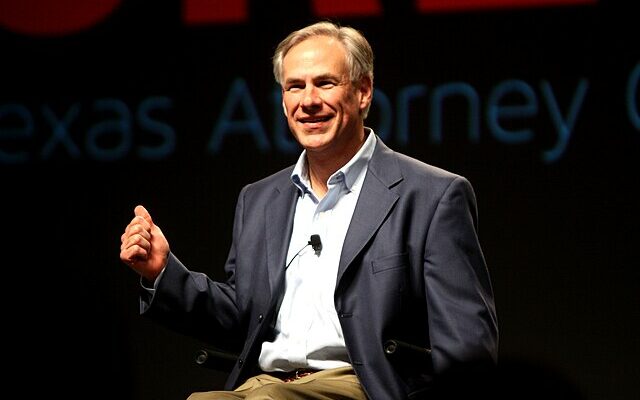
The extraordinary figures have prompted Republican Gov. Greg Abbott to take an increasingly aggressive position against new data center development as he faces Democratic challenger Gina Hinojosa.
In August, Abbott directed state regulators to audit proposed data centers before allowing them to connect to the electrical grid. He subsequently halted state environmental permitting for the facilities pending completion of the review.
Abbott has insisted that data centers must “pay their own way,” including covering the infrastructure costs associated with their massive electricity consumption. His administration has also encouraged companies to generate their own electricity, secure independent water supplies, and reduce their dependence on public infrastructure.
The Republican governor has additionally called for eliminating certain sales tax exemptions that have helped attract data center developers to Texas.
Hinojosa, meanwhile, has demanded even stronger restrictions, arguing that Abbott’s temporary moratorium does not provide sufficient protection for residents worried about rising electricity bills and water consumption.
The Democrat has called for an executive order and a special legislative session to establish permanent restrictions. She has argued that Abbott’s current pause “goes away on November 4th,” leaving the industry free to resume development after Election Day.
The political reversal has been remarkable. Less than a year ago, Abbott was enthusiastically promoting Texas as an AI development hub, including when Google announced plans to invest $40 billion in three data center campuses.
Now, both major gubernatorial candidates are campaigning on restricting the very industry Texas spent years attracting.
The consequences could extend well beyond the companies building data centers.
Major utilities, including Sempra, CenterPoint Energy, American Electric Power, Entergy, and Xcel Energy, have substantial exposure to Texas electricity demand. These companies stand to benefit from the construction of new transmission lines, power plants, and other infrastructure needed to support AI development.
But regulatory uncertainty threatens to delay projects and complicate the investments needed to expand the state’s electricity supply.
Texas is hardly alone.
Bank of America’s broader analysis identified data center restrictions and moratorium proposals as issues in 20 of the 36 gubernatorial elections taking place this year. An analysis of the industry’s national development pipeline identified approximately 60 gigawatts of planned or developing data center capacity in politically consequential states, including roughly 24 gigawatts in Texas.
The sudden political backlash reflects growing anxiety about electricity prices, water consumption, and the effects of large industrial projects on surrounding communities. Politicians who once celebrated data centers as engines of economic development are increasingly treating them as political liabilities.
And the implications for the broader economy are significant.
Artificial intelligence companies need enormous quantities of electricity to operate their increasingly sophisticated computing systems. Yet building new generation capacity, expanding transmission infrastructure, and securing regulatory approval can take years.
The resulting bottleneck threatens to undermine one of the country’s fastest-growing industries, even as American technology companies compete with China for leadership in artificial intelligence.
Texas has the land, energy resources, and business environment to play a central role in that competition. But the state’s increasingly restrictive political climate raises questions about whether those advantages will translate into actual development.
For investors, the Texas governor’s race has become a referendum on the future of the AI infrastructure boom.
For the technology industry, it may be an early warning that America’s greatest obstacle to building the infrastructure of the future is becoming political opposition at home.
[READ MORE: NFL Stars Fail To Move Vote]