 By
By A government-funded advertisement featuring President Donald Trump’s pledge to dismantle the “deep state” aired on Fox News Sunday, setting off a wave of criticism from Democrats and media commentators who accused the administration of making taxpayers foot the bill for campaign messaging.
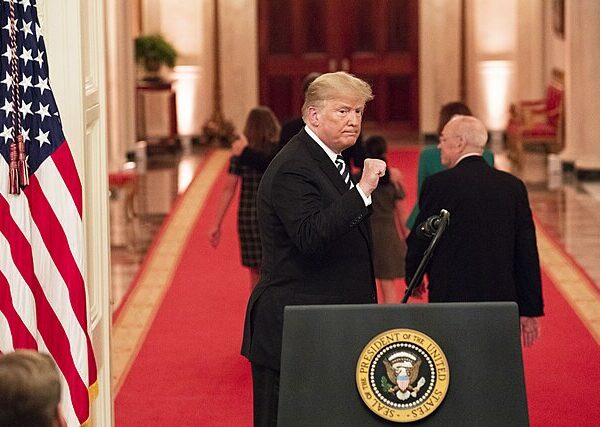
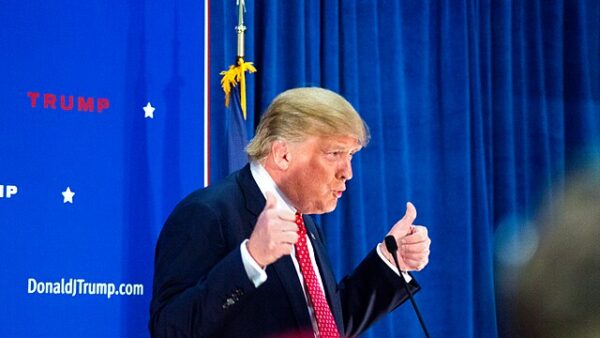
The 30-second, black-and-white spot showed a grim-faced Trump walking down a hallway as audio of a rally speech played. It closely resembled a 2024 campaign advertisement, with one addition that became the focus of the backlash: a closing disclaimer saying it was “paid for by the U.S. government.”
“This is the final battle,” Trump said in the commercial. “With you at my side, we will demolish the deep state. We will expel the warmongers from our government. We will drive out the globalists. We will cast out the communists, Marxists and fascists. We will throw off the sick political class that hates our country. We will rout the fake news media. And we will liberate America from these villains once and for all.”
🚨🚨BREAKING🚨🚨
PRESIDENT DONALD TRUMP APPEARED IN TAXPAYER-FUNDED ADS DURING THE #NFL GAMES TODAY.
The new White House ad features Trump warning that “THIS IS THE FINAL BATTLE” ahead of the midterm elections.
The ads have sparked major backlash: pic.twitter.com/QSo4NCapon
— MLFootball (@MLFootball) September 28, 2026
The commercial was the second government-funded spot featuring Trump to surface in recent days. An earlier advertisement paired images of the president with the song “Love Me” by JMSN, who said he had not authorized the use of his music and was consulting lawyers, according to Mediate.
The White House defended that earlier commercial as a patriotic public service announcement. A spokesperson told CBS News, “These public service announcements are about reminding Americans to love their country and understand what makes it worth defending, at home, at our borders, and abroad. The ad is educational and unapologetically patriotic. We should be proud of our country.”
That explanation did little to quiet the president’s critics, several of whom declared the spending illegal. Former Obama adviser Dan Pfeiffer called the latest spot “both incredibly illegal and politically asinine,” adding, “Kudos to everyone involved.”
Sarah Longwell argued that Trump’s supporters could have financed the commercial themselves. “What’s crazy is it’s not that hard to for a White House to steer donors to an outside group who can run fluffer ads like this. But no, Trump and this administration wants to take the maximally corrupt route just to show you they can get away with it.”
Sen. Brian Schatz (D-Hawaii) questioned what public purpose the advertisement served, saying he had “Honestly had missed the President is running taxpayer funded campaign ads. Not even pretending to have a message that is useful to the public. Even if you agree with him you want the government itself buying 30 second spots?”
Honestly had missed the President is running taxpayer funded campaign ads. Not even pretending to have a message that is useful to the public. Even if you agree with him you want the government itself buying 30 second spots?
— Brian Schatz (@brianschatz) September 27, 2026
The White House has rejected the criticism, arguing that Trump is not on the ballot and that the announcements contain no electoral call to action. Its defense is straightforward: encouraging Americans to love their country and understand why it is worth defending—at home, at the border, and abroad—is a legitimate function of government, not inherently a partisan campaign message.
Federal advertising also has a long bipartisan history. George W. Bush’s administration promoted Medicare prescription drug benefits and purchased Super Bowl airtime for anti-drug and anti-terrorism announcements. Barack Obama’s administration advertised Obamacare enrollment and subsidies and promoted its Waters of the United States rule through a digital campaign, while Joe Biden’s administration spent hundreds of millions of dollars on its “We Can Do This” public health campaign. Those efforts differed in content and purpose, but they underscore that using taxpayer-funded media to advance an administration’s message did not begin with Trump.
[READ MORE: Senate Republicans Are Trying To Save Our Cars]